It’s Tuesday. Read up on the latest from WTTW News on policing, prisons and politics.
|
|
|
|
|
|
 |
Chicago Police Supt. Larry Snelling addresses the news media on Tuesday, Jan. 28, 2025. (WTTW News)
|
When Supt. Larry Snelling took the helm of the Chicago Police Department in the fall of 2023, it had fully complied with just 6% of the federal court order that requires CPD to stop routinely violating Black and Latino residents’ constitutional rights.
By the time Snelling retires Wednesday, CPD will have completed just 25% of the consent decree’s requirements, according to the most recent measurement.
That means it will be up to Snelling’s successor to complete the hundreds of tasks laid out by the nearly seven-and-a-half-year-old court order while making sure the changes stick — and put an end to the decades of scandals, misconduct and brutality that have defined CPD and cost taxpayers hundreds of millions of dollars.
Some backstory:
Mayor Brandon Johnson often praised Snelling — his pick to lead the department’s 11,600 officers — for his handling of the consent decree, repeatedly telling reporters that the superintendent made more progress in complying with the court order in less than three years than the five other interim and permanent superintendents who led the department between March 2019 and September 2023 combined.
Ensuring CPD complies with the consent decree is “one my most important responsibilities as mayor,” Johnson said.
Illinois Attorney General Kwame Raoul, whose predecessor sued the city to force it to agree to federal court oversight said Snelling could have directed a member of his command staff to handle consent decree matters, as his predecessors did, but chose to make it a priority.
“He leaned in, even when he didn’t have to,” Raoul told WTTW News. “He was willing to engage personally in the reform effort.”
If the department’s 65th permanent superintendent does not follow Snelling’s lead, the reform effort could stall, Raoul warned
Arewa Winters, an elected member of the Austin (15th) Police District Council, praised Snelling for meeting regularly with them about the consent decree and the reform push, but said the superintendent offered them only excuses and platitudes instead of action.
“He was a company man,” Winters said. “He did the best he could under the circumstances.”
|
|
|
|
|
|
|
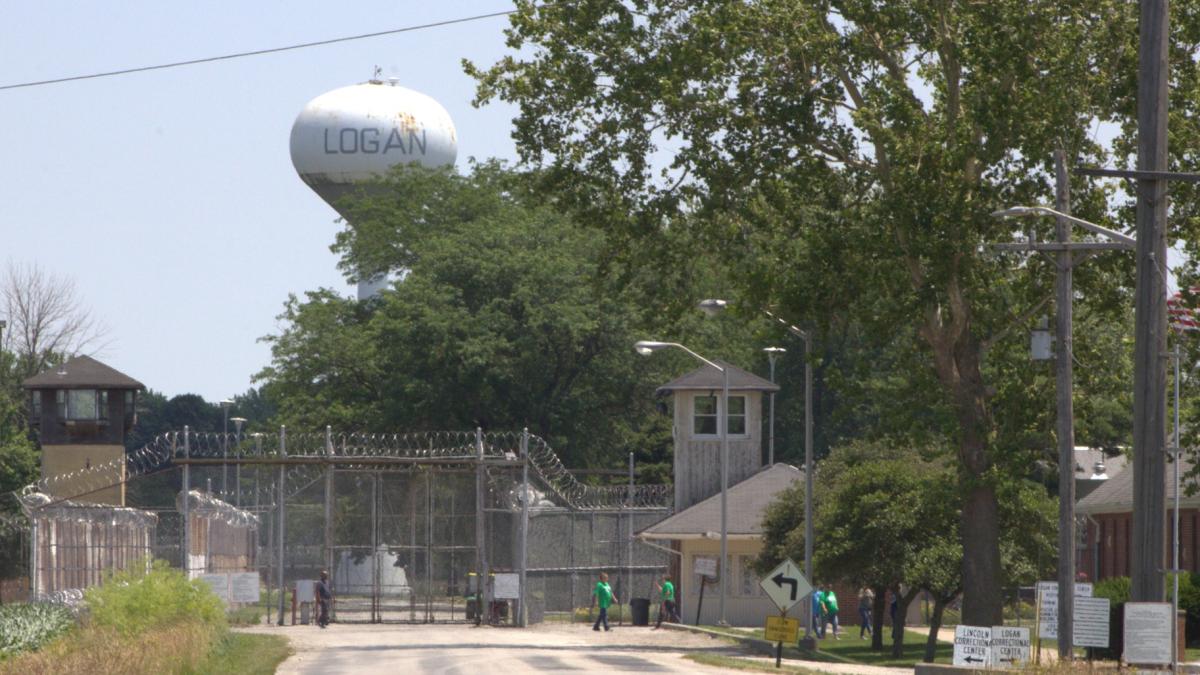 |
Logan Correctional Center pictured in a file photo. (Blair Paddock / WTTW News)
|
In 2024, Illinois announced a $900 million plan to close and rebuild two prisons, Stateville and Logan correctional centers.
Stateville will be rebuilt on its existing property, a sprawling 2,200 acres in south suburban Crest Hill. The rebuild site of Logan, currently located about 30 miles north of Springfield in Lincoln, was under debate until last month.
Logan, the largest women’s prison in the state, will be rebuilt with an 800-bed capacity on Stateville’s property, about 140 miles to the north of the closing prison. As of this spring, Logan housed around 1,200 women and employed more than 400 people.
A new location was needed to ensure proper space, security and operational needs were met, the Illinois Department of Corrections and the state’s Capital Development Board said in a statement.
Logan’s move elicits mixed emotions among both the women incarcerated inside of it and its employees. Correctional officers worry about job security, while some incarcerated women are concerned about moving away from their downstate families and others don’t want another prison built at all. Meanwhile, some residents in Lincoln think the prison’s move is a death knell for their town.
The closure of Logan won’t occur until the new facility is built, a process that is estimated to take five years.
In the meantime, Logan will continue to operate as it approaches an “inoperable” state. A state-commissioned 2023 report found the prison to be “inefficient, ineffective, and unsuitable for any population” with $116 million in deferred maintenance.
When the women’s prison in Dwight closed in 2013, sending that population to Logan, many women were traumatized. A 2016 report from the Women’s Justice Institute, and other contributors including IDOC, found that Logan was “not designed to address the operational needs of a large women’s population.” Advocates have been pushing for the department to endorse their proposed transfer plan.
In order to gain a deeper understanding of the impending move’s impact, WTTW News spoke and messaged with employees and women incarcerated at Logan about the closure and relocation. Click here for their thoughts. Responses have been edited for length and clarity.
|
|
|
|
|
|
|
|
 |
A rendering of the Chicago Fire stadium in the South Loop. (Courtesy Chicago Fire FC)
|
A planned vote by the Chicago City Council’s Finance Committee to approve the sale of Chicago’s parking meters to a New York-based investment firm was called off Monday, leaving the fate of city’s 36,000 parking meters — and the tens of millions of dollars in revenue they generate — in limbo.
Finance Committee Chair Ald. Pat Dowell (3rd Ward) said she was calling off the vote amid “ongoing discussions” with Stonepeak Partners about new information. Dowell told the committee that she had been told a July 24 deadline to approve the sale, as the original lease agreement requires, would be pushed back.
Stonepeak has asked the City Council to approve the $2.53 billion sale of the meters from Chicago Parking Meters LLC. In 2008, the firm leased the city’s meters for 75 years in return for $1.15 billion a much-loathed deal crafted by former Mayor Richard M. Daley and rubber stamped by the City Council that continues roil Chicago politics nearly two decades later.
Mayor Brandon Johnson announced in January that the city would not buy back the city’s meters, telling reporters “the final purchase price was far too high.”
What else happened?
Efforts to build a 22,000-seat stadium for the Chicago Fire soccer team advanced Monday with a vote by a key city panel to use $425 million from the area’s Tax Increment Financing districts to subsidize the project.
The subsidy will make it possible for the team’s owner — Joe Mansueto, the billionaire founder of financial services firm Morningstar — to build a new $750 million stadium south of the Loop. The soccer club is privately financing the stadium, even though it would not be reachable unless the city agrees to use taxpayer dollars to build the necessary infrastructure.
|
|
|
|
|
|
More From WTTW News:
|
The Rev. Michael Pfleger, the longtime leader of St. Sabina Catholic Church and a vocal social justice and antiviolence activist, has been removed from the South Side parish following a new allegation of sexual abuse.
|
 |
|
|
|
|
Back in the Day: July 14, 2001 - Jimmie Johnson Wins First Race at Chicago International Speedway
|
Joliet’s Chicagoland Speedway opened on July 12, 2001, and two days later hosted its first-ever race: the Sam's Club Presents the Hills Bros. Coffee 300 for the NASCAR Busch Series. (Now called the NASCAR O'Reilly Auto Parts Series, this is the second tier of NASCAR Racing, below the top division Cup Series). On this day 25 years ago, the driver Jimmie Johnson secured his first-ever NASCAR win driving a Chevrolet for Herzog Motorsports. He’d make his Cup Series debut later that year and would go on to become one of NASCAR’s all-time winningest drivers. He’d win seven Cup Series championships, including an unprecedented feat of five consecutive titles from 2006 to
2010.
|
|
|
|
|
This Week’s Staff Recommendations
|
Every Tuesday, WTTW News staffers highlight their favorite things in Chicago. This week, it’s Andrew Montequin, Minow Fellow for WTTW News and “Chicago Tonight,” on his favorite area in the city.
Andrew Montequin: Neighborhood guides are a recurring hit for Staff Picks, but boundaries can be fuzzy. On the far North Side, centered around the intersection of Clark Street and Devon Avenue, is the meta-neighborhood I’m going to call “West Redgewaters Park.”
This area touches four wards (40, 48, 49 and 50), at least three community areas (Rogers Park, West Ridge, and Edgewater) and two glacial remnants (Ridge Blvd. and Clark St.). It’s served by three train stations (Rogers Park and Peterson on Metra’s UP-N, and Loyola on the Red Line), and CTA Buses #22, 36, 151 and 155.
It’s also home to some of the most diverse parts of the city. So, while I can give my recommendations, I don’t think any one person can write the definitive guide. The best you can do is experience it for yourself.
Walk Along Ridge Boulevard:
Ridge is a rarity in Chicago, as a hill and a diagonal street. You’ll see plenty of buildings made to fit the land, like “the Birdcage Apartments” at Farwell. It’s also where the Bungalow Belt meets the city’s older courtyard buildings. In ancient history, this was once the shore of Glacial Lake Chicago. Later, the sandy soil made this area into a national hub for celery farming. Work your way south and you’ll see mid-century gems like the Heart O Chicago motel.
Play a Sport:
Warren Park is home to a cricket field, nine-hole golf course, ice rink, basketball courts, baseball fields, sled hill, and even horseshoe pits. In the leftover space, I’ve seen games of flag football, footvolley, futsal, and rugby. If you prefer watching, there are plenty of dive bars. But I’ll give a special shout-out to Whiskey Girl Tavern, where the WNBA and NWSL take precedence.
Eat, Drink, Etc:
Like I said, I can’t give the definitive neighborhood guide. Instead, I’ll focus on the one block of Clark, between North Shore and Wallen. Here, you can find fresh Ethiopian coffee beans, piñon (pine nut) paletas, birria burgers, pozole on the weekends and one of the city’s newest blues bars.
|
|
|
|
|
|
|
What's the best place for a Chicago-style hot dog?
|
|
|
Email DailyChicagoan@wttw.com with your responses and your answers might be published.
|
|
|

|
|
5:30 PM | 10:00 PM
|
|
|
Want more WTTW News content? Follow WTTW on
Instagram to check in with us daily, go behind-the-scenes, and more.
|
Newsletter Producer: Josh Terry
|
|
|
|
|