|
|
|
|
 |
|
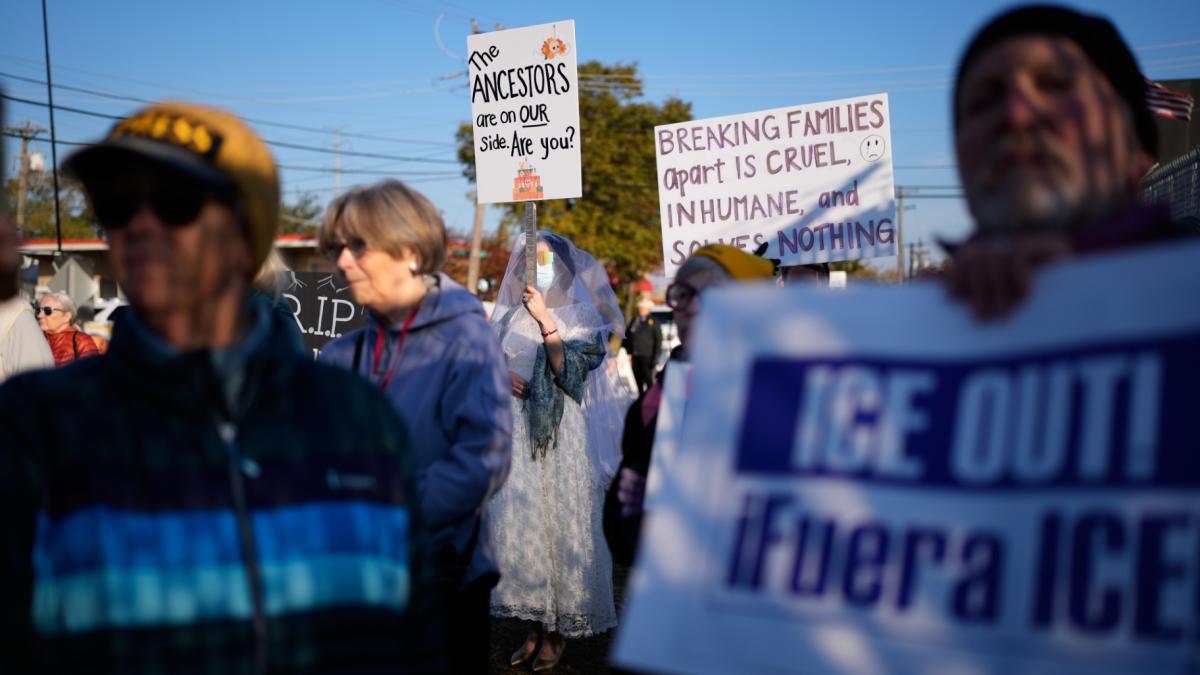
Protesters gather outside an ICE processing facility in the Chicago suburb of Broadview, Ill., Friday, Oct. 31, 2025. (AP Photo / Nam Y. Huh) |
|
After daylong hearings, hours of witness testimony and high-profile rulings, Chicago’s Dirksen Federal Building has served as the battleground over the Trump administration’s wildly expanded immigration enforcement efforts throughout northern Illinois. After a big week in court, here’s where several prominent cases in Chicago currently stand.
Use of Force by Immigration Agents
What the case is about: The lawsuit was brought by a group of local journalists, protesters and clergy members in early October. In it they alleged they had been subjected to a “pattern of extreme brutality” by immigration agents who had repeatedly used unjustified force against them without cause.
Where the case is now: Following a marathon hearing Wednesday, U.S. District Judge Sara Ellis granted that injunction, finding that agents used force that “shocks the conscience” and then lied about their actions. Her order took effect Thursday morning, though the Trump administration intends to appeal that injunction.
National Guard Deployment
What the case is about: U.S. District Judge April Perry issued a temporary order barring the deployment of some 700 National Guard troops into Chicago and Illinois. While that case continues playing out in her own courtroom, the Trump administration has appealed to the U.S. Supreme Court.
Where the case is now: The case is in a holding pattern, for now.
Conditions at Broadview
What the case is about: The lawsuit alleged that detainees housed at ICE’s Broadview facility were forced to endure “inhumane” conditions that included overcrowding and inadequate food and water supplies.
While the site operates as a processing center — not a detention center where detainees are held for longer periods — the lawsuit alleged that people processed there have been kept in Broadview for “up to a week or more.”
Where the case is now: U.S. District Judge Robert Gettleman on Wednesday granted a temporary restraining order requiring ICE and the Department of Homeland Security to provide clean bedding mats, toiletries and at least three full meals per day to detainees.
The temporary restraining order is set to remain in effect until Nov. 19. |
|
|
|
|
|
|
|
 |
|
(Michael Izquierdo / WTTW News) |
|
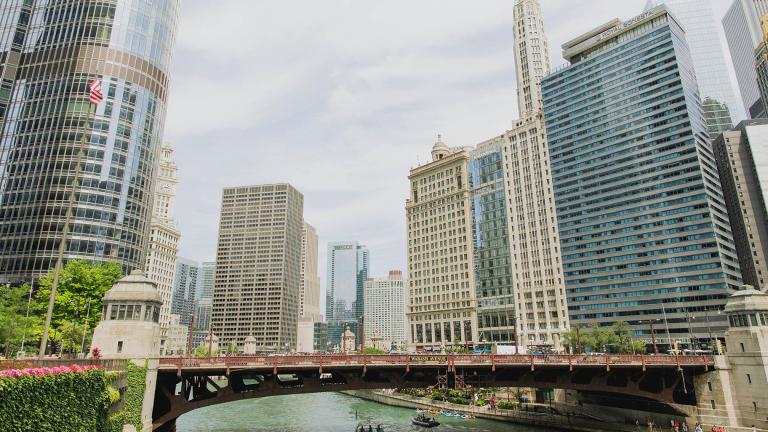
Mayor Brandon Johnson is calling for more taxes on big companies in his 2026 budget proposal. Under the mayor’s plan, businesses in Chicago with more than 100 employees would have to pay $21 for each employee every month. Johnson said the extra charge would generate $100 million to fund local services like violence prevention. But it’s sparking heated debate as critics say the tax would hurt the local economy. He defended the plan in a news conference last week, saying companies should invest more in the city. He told reporters that the tax would only impact 3% of the city’s largest corporations.
Ishan Daya, co-director at the Institute for Public Good, a nonpartisan advocacy and policy group, said big companies should pay their fair share.
“Do we either tax corporations or tax working people in a moment where their health insurance plans are increasing or do we cut the services that Chicagoans rely on every day?” Daya said.
But getting enough support in the Chicago City Council to pass the tax could be an uphill battle. It’s been panned by several alderpeople and opponents who call the idea a “job killer.”
Pat Doerr, director of the Hospitality Business Association of Chicago, said the costs of the taxes are too high and they would discourage companies from moving to the city and hiring locally.
“Having to tell somebody who wants to start a business here, ‘Oh, by the way, if you do us a favor and create this many jobs, you’re going to owe us an extra $2,100 a month for those hundred employees,’ is not an economic development pitch that I think even Shakespeare could sell,” Doerr said. |
|
|
|
|
|
|
|
 |
|
(WTTW News) |
|
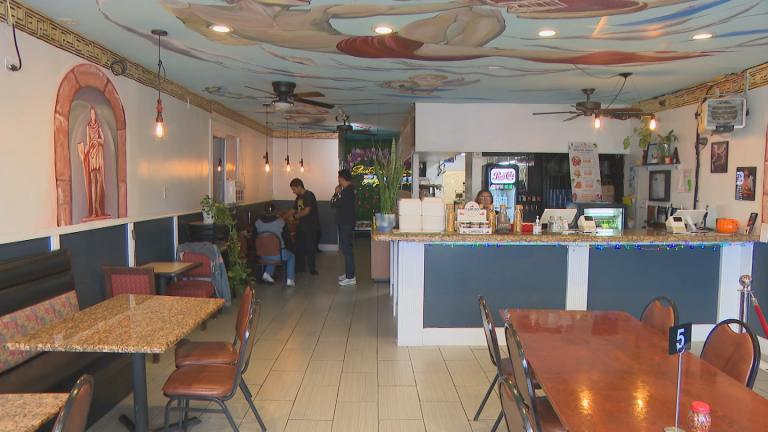
As ramped-up immigration enforcement efforts continue across the Chicago region, some businesses report that sales are as bad as they were during the COVID-19 pandemic.
“I thought after COVID, like, alright, we’re in the clear,” said Adrian Zamudio, owner of Angelo’s Stuffed Pizza in Archer Heights. “We don’t have to think of anything spontaneous or something to survive anymore. A couple years later, here we are again.”
Zamudio said that since the start of the Trump administration’s so-called “Operation Midway Blitz,” there has been a noticeable decline in business.
On any given weekday at lunchtime, Zamudio said, the restaurant would normally be packed with customers. He said slow sales have forced him to close shop on Mondays.
Some backstory:
Illinois is home to thousands of Latino-owned businesses contributing millions in tax revenue.
Take Little Village, a neighborhood with a predominantly Latino population. It generates nearly $900 million a year in business, according to the Little Village Chamber of Commerce.
However, business owners are now reporting losses in sales of between 50-70% since the start of escalated federal immigration operations.
“We stimulate the economy,” Victor Gallardo, co-owner of Belmont Cragin’s Hangry’s, said. “In our own way we keep it going and not only by spending, also by working, by producing, by helping out.” |
|
|
|
|
|
Back in the Day: Nov. 10, 1969 - ‘Sesame Street’ Airs Its First Episode |
|
By the late 1960s, nine in 10 Americans owned a television set, and the majority of people said they got their news from TV rather than newspapers. But one area in the medium that needed a boost was children’s programming, which was often low-budget, put on by local stations and criticized for neglecting both educational goals and cultural diversity. That changed when “Sesame Street” first premiered on public television stations across the country, including WTTW, 56 years ago today. On Nov. 10, 1969, the first episode of “Sesame Street” aired. In just a month, it became a massive success. “If the current television season has produced one undisputed hit, it is ‘Sesame Street,’ the experimental venture of the Children's Television Workshop,” wrote the New York Times in Dec. 1969. One of the longest-running TV shows in the world, it's aired nearly 5,000 episodes and has a new season out today via Netflix. |
 |
|
|
|
|
This Week’s Civic Events and Meetings |
|
Every Monday, WTTW News highlights the best ways to get involved with local government.
City Council’s Committee on Budget and Government Operations
On Monday at 2 p.m. the City Council’s Committee on Budget and Government Operations will hold a subject matter hearing on Mayor Johnson’s proposed budget. While the written public comment deadline has passed, check here for more details on the agenda.
Fireside Chat with Rep. Robin Kelly
Hosted by The Harvard Club of Chicago, stop by the Hideout Monday evening for a talk with U.S. Rep. Robin Kelly. Tickets for the 6 p.m. event can be bought here.
News Night
On Thursday at 7 p.m., head to Lakeview arts storefront Kiosk for another installment of News Night, an informal gathering, roundtable discussion and happy hour where journalists talk about their work, recent stories and the issues facing Chicago. This week’s guests include Injustice Watch’s Kelly Walsh, WBEZ’s Dan Mihalopoulos and ProPublica’s Duaa Eldeib. It’s a free event.
City Council
A regular meeting of the City Council of the City of Chicago will be held Friday at 10 a.m. |
|
|
|
|
|
|
|
|
What’s your favorite place for tavern-style pizza in the Chicago area? Tell us where and why.
|
|
|
|
Email DailyChicagoan@wttw.com with your responses and your answers might be published.
|
|
|
|
 |
|
|
|
5:30 PM | 10:00 PM |
|
|
|
|
Want more WTTW News content? Follow WTTW on Instagram to check in with us daily, go behind-the-scenes, and more. |
|
Newsletter Producer: Josh Terry |
|
|
|
|