Today’s Daily Chicagoan is brought to you, in part, by:
|

|
|
|
|
It’s Friday. Today we have stories on 25 years since September 11, a new approach to public transit and the discovery of a very big boulder.
|
|
|
|
|
|
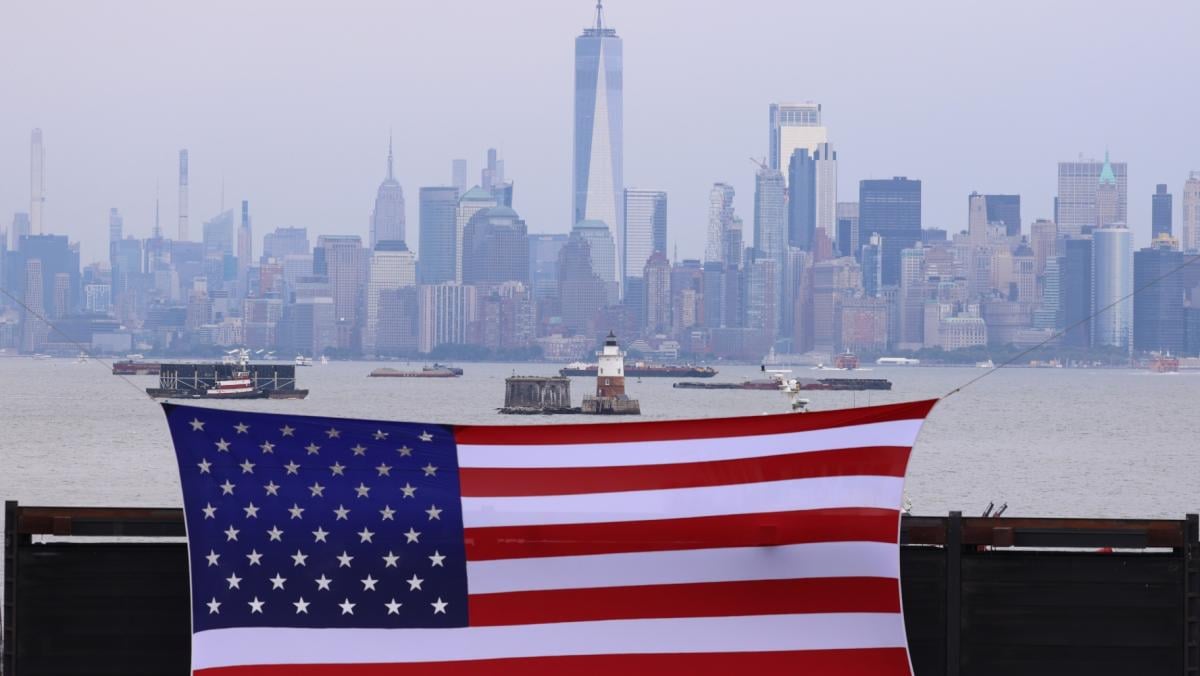 |
A view of the New York skyline during an FDNY memorial to commemorate the 25th anniversary of the 9/11 attacks, Wednesday, Sept. 9, 2026, in the Staten Island borough of New York. (AP Photo/Pamela Smith)
|
Today mark 25 years since the World Trade Center attacks on Sept. 11, 2001.
Between the attacks themselves, the lasting health impacts on survivors and ensuing wars, the death toll for Americans is in the tens of thousands.
At ceremonies Monday morning across the country, the anniversary was marked with wreath-laying, flag-flying, moments of silence, vigils and readings of victims’ names. At the ground zero ceremony in New York City, relatives read the long list of names who were lost that day.
For Angilic Casalduc, attending the New York ceremony “helps to show you’re not alone.” Her mother, Vivian Casalduc, was killed in the attack.
“There’s no timeline for grief, and unfortunately, no one can say how can you can grieve, but coming here once a year makes it feel just a little bit better,” she said.
The aftermath: Now, one generation later, the country and the rest of the world are still reckoning with the aftermath. Amid the mourning, Americans have grappled with societal changes over the past quarter of a century. From conflict abroad to civil liberties at home, the shocks of the 9/11 attacks still linger today.
According to Tom Mockaitis, a history professor at DePaul University, the aftermath of 9/11 kicked off the deepening of social and political divisions in the country.
“It really began the process of this deep divide over who exactly is an American,” Mockaitis said. “Soon after 9/11, there was a brief period of unity, and then it was looking for scapegoats.”
Ibrahim Abusharif, now a professor of journalism and Middle East studies at Northwestern University, had two thoughts when he first heard of the attacks 25 years ago.
“No. 1, it was a horrific attack, and we feel sad about that,” Abusharif said. “But for Muslim Americans, especially Arab Muslim Americans, there was another concern — we’re going to get the backlash. So we didn’t even have a chance to mourn.”
The attacks have had lasting effects on how terrorism is viewed in the U.S., impacted a generation of foreign policy decisions and resulted in the creation of the U.S. Department of Homeland Security, the passage of the Patriot Act and the expansion of executive power over war.
|
|
|
|
|
Sponsor Message
|
|
Andersonville Internal Medicine is a Chicago-based concierge practice providing personalized primary care for adults through a relationship-centered, membership-based model. By caring for a smaller patient panel, our physicians are able to offer extended appointments, proactive preventive care, and 24/7 direct access. We provide same-day or next-day appointments, as well as regular health check-ins focused on both chronic disease management and long-term wellness.
Our concierge care model emphasizes seamless, personal, and consistent care over time. Call or inquire online for a complimentary meet and greet appointment in either Andersonville or Evanston. Healthcare as it should be.
|
|
|
|
|
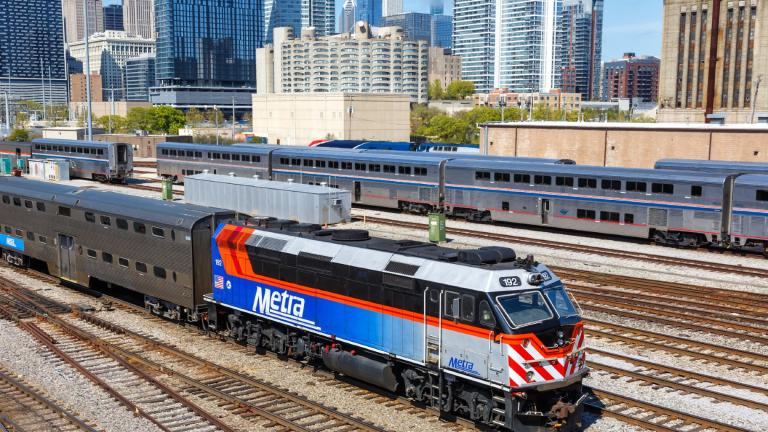 |
(Boarding1Now / iStock)
|
The newly formed Northern Illinois Transit Authority’s board of directors met for the first time Thursday, electing longtime transit policy expert Tom Kotarac as chairman.
Some backstory:
NITA, created last year to oversee CTA, Metra and Pace, officially replaced the Regional Transportation Authority on Sept. 1. The new governance model came along with an additional $1.5 billion in annual funding for transit to prevent the three operators from going over a fiscal cliff. A slew of elected and appointed officials spoke Thursday, celebrating the achievement and expressing excitement for the work ahead.
Kotarac, whose term as board chair will run for three years, said he’s “bullish” on Chicago-area transit, hailing the “enormous amount of experience and passion and firepower” among his fellow directors. He praised state lawmakers not only for plugging a budget gap as other regions had done with their transit systems but also for taking the opportunity to make “transformational” change.
Kotarac is a vice president of the Civic Committee of the Commercial Club of Chicago, former deputy executive director of CMAP and a former senior staffer for U.S. Sen. Dick Durbin (D-Illinois). Kotarac, who’s been heavily involved in negotiating the law that created NITA and the ongoing transition, acknowledged the enormity of the task facing NITA, CTA, Metra and Pace as they work to create a truly regional transit system.
“We’re going to need some patience from the public,” Kotarac said. “We’re going to need some patience and grace from each other as we work through some difficult issues. But patience can’t become an excuse for delay or inaction.”
At Thursday’s meeting, the board also appointed former Chicago Department of Aviation Commissioner Jamie Rhee as interim executive director of NITA by a 19-1 vote. Kotarac called Rhee, whose term is for six months with an option by the board to extend, “one of the region’s best public servants.”
One of the driving forces behind NITA was creating a universal fare system across the three transit operators. The process for procuring that system is set to be in place by July 1, 2027, with the system fully up and running Feb. 1, 2030.
|
|
|
|
|
|
|
|
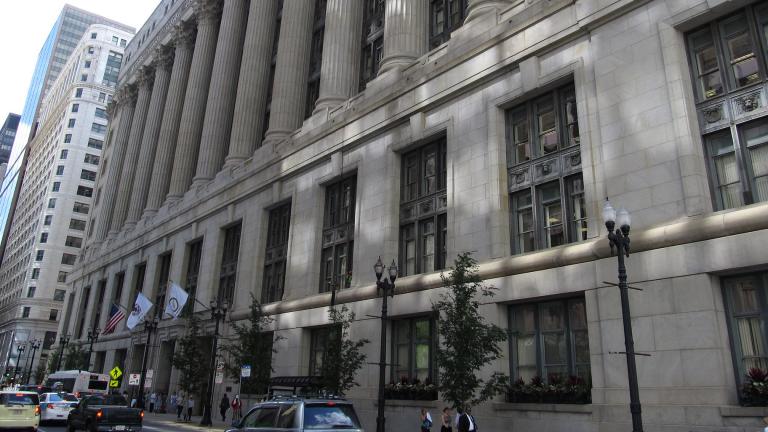 |
Chicago City Hall. (WTTW News)
|
Several proposed settlements, ranging from wrongful convictions to police misconduct, are set to be considered Monday by the Chicago City Council’s Finance Committee. Final votes from the City Council could come on Sept. 23.
Here's what to know:
Arturo DeLeon-Reyes and Gabriel Solache said they falsely confessed to murdering Mariano and Jacinta Soto and kidnapping their children after disgraced former Chicago Police Detective Reynaldo Guevara struck them and lied about what they said during an interrogation that lasted nearly two days.
Both DeLeon-Reyes, who was sentenced to life in prison, and Solache, who was sentenced to death, were granted certificates of innocence by a judge.
Chicago should pay $6 million to the family of a man who was struck and killed by a driver being chased by Chicago police while waiting at a CTA bus stop, city lawyers recommended, the latest massive settlement prompted by a police pursuit.
Michael A. Jordan, 27, died in the crash that ended the chase on just before noon June 30, 2019, while sitting at the bus shelter near 99th Street and Van Vlissingen Road in Jeffrey Manor.
Former Chicago Police Supt. Larry Snelling and the agency tasked with investigating police misconduct agreed in April that Officer Michael Donnelly should be suspended for 89 days in connection with the conduct that sparked the lawsuit.
|
|
|
|
|
|
More From WTTW News:
|
|
|
 |
|
|
|
|
Back in the Day: September 11, 2001 - How “Chicago Tonight” Covered the 9/11 Terror Attacks
|
“It's being called one of the darkest days in America: a second Pearl Harbor,” host Phil Ponce said in the opening of a one-hour edition of “Chicago Tonight” that aired on this day 25 years ago following the terror attacks on New York City’s World Trade Center and the Pentagon in Washington, D.C. “What happened this morning is almost beyond comprehension and belief. One commentator called it ‘an attack on America’s soul.’ People across the country have reacted with shock, anger and sorrow to the events on the East Coast.” At the time, questions like the number dead, who was responsible and how the country would react to this tragedy were as yet unanswered.
Ponce was joined by a roundtable of Rahm Emanuel, then a former advisor to President Bill Clinton; University of Chicago professors and authors John Mearsheimer and Robert Pape; DePaul professor and aviation expert Joseph Schwieterman; DePaul law professor M. Cherif Bassiouni; and U.S. Rep. Mark Kirk and U.S. Sen. Dick Durbin, who both joined by phone from Washington, D.C. Revisit the episode here.
|
|
|
|
|
|
|
What's the No. 1 thing Chicagoans should do outside before summer is over?
|
|
|
Email DailyChicagoan@wttw.com with your responses and your answers might be published. Here's what you had to say:
“Jump in the lake. This is the best time of year to do it. Love 2 jump in da lake.” — @perefex.bsky.social
“Here’s my list: Hit another game at Wrigley Field or Rate Field and have a burger on the patio at Moody’s Pub” — Josh Terry, newsletter producer
|
|
|

|
|
5:30 PM | 7:00 PM
|
|
|
Want more WTTW News content? Follow WTTW on
Instagram to check in with us daily, go behind-the-scenes, and more.
|
Newsletter Producer: Josh Terry
|
|
|
|
|