It’s Thursday. Forgive our delay. WTTW News has stories on education, policing and more.
|
|
|
|
|
|
 |
(WTTW News)
|
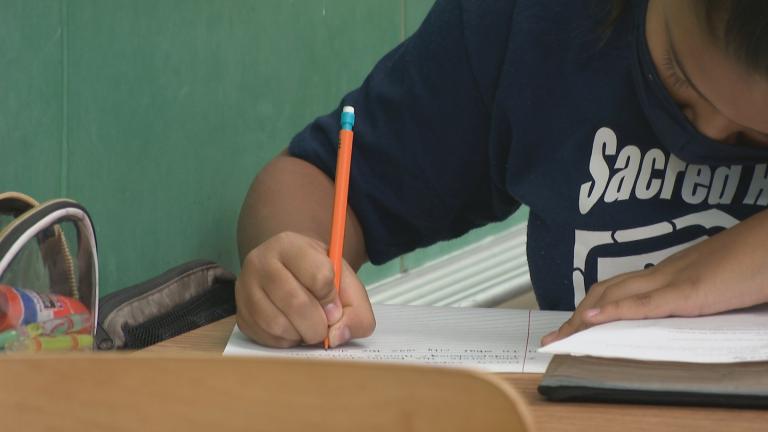
Illinois is among a handful of states deciding whether to opt in to a new federal school voucher program. Twenty-eight states have opted in to the federal school voucher program so far, most of which are Republican-led.
Under the program, donors can give up to $1,700 to scholarship-awarding organizations for K-12 schools and get an equivalent amount back in federal tax credits.
Scholarships can be used to help pay for private school tuition. Students are eligible to receive the scholarships if their household income is within 300% of their area’s median income.
Those opposed argue the program diverts public dollars to private schools while public schools remain underfunded. Supporters of the program argue that not opting in would leave money on the table that could otherwise go to support students in the state.
Ann Courter, education issues specialist for the League of Women Voters of Illinois, and Austin Berg, executive director for the Chicago Policy Center at the Illinois Policy Institute, joined “Chicago Tonight” to debate what impact the federal program could have on Illinois students.
Experts debate:
Courter argued that the federal program would hurt public schools and that the money from the program would largely flow to private religious schools, comparing the program to Invest in Kids, a tax credit scholarship program in Illinois that lawmakers sunset in 2023.
“If even a few students leave the public system, schools are left with fixed costs,” Courter said. “They rely on headcount to get federal money and to get state money, and so if they have fewer kids, they get less money from the state and the federal government.”
Berg, whose organization is in support of the federal tax credit scholarship program, said there’s bipartisan interest in the program. He argues it shouldn’t be a red or a blue issue, citing Colorado Gov. Jared Polis, a Democrat, saying he would opt in to the program.
“In no way does it take away money for public schools,” Berg said. “It’s not money coming out of the federal education grants that go to states. … In essence, it’s only a positive impact because this is money that otherwise would go to other states through the scholarship program. It would flow to Illinois, so more families get more access to more educational resources.”
|
|
|
|
|
|
|
|
 |
Chicago Police Supt. Larry Snelling. (WTTW News)
|
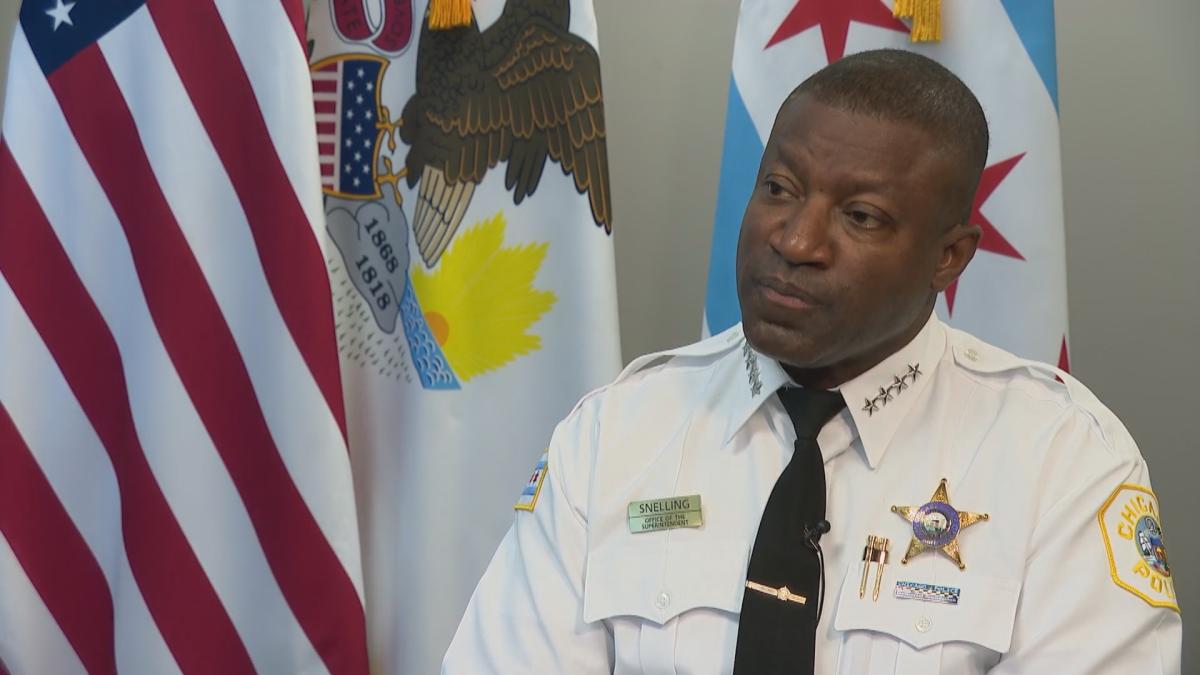
Chicago Police Supt. Larry Snelling must explain why the number of times police officers used force against individuals has significantly increased since 2022, and detail what he is doing to reverse that trend, according to a measure approved by Chicago’s police oversight board.
Snelling, who took over CPD in September 2023 after being appointed by Mayor Brandon Johnson and unanimously confirmed by the Chicago City Council, must also explain why the number of time officers pointed their guns at individuals increased 44% between 2022 and 2024, according to one of the goals unanimously set for Snelling to achieve in 2026 by the Community Commission for Public Safety
and Accountability during its meeting on Jan. 29.
“It is imperative that CPD provide community members with an understanding and explanation of why these increases have been occurring and what, if anything, the department is doing to identify and address any trends,” according to the goals set by the commission, which has the power to set CPD policy and is responsible for evaluating Snelling’s performance.
Before accepting the last of the four goals set by the oversight board, better known as the CCPSA, Snelling pushed back, telling its seven members he had already explained the increase in uses of force and firearm pointing incidents during the commission’s December meeting and promised to be transparent about that data.
More context:
Snelling has repeatedly said that he does not believe that CPD officers are actually using force against Chicagoans more often but simply reporting those incidents accurately for the first time as compliance ramps up with federal court order that requires officers to stop routinely violating Black and Latino residents’ constitutional rights.
Chicago police officers used force against members of the public 1,645 times during the first six months of 2025, an increase of nearly 10%, as compared with the first half of 2024, according to the most recent data on use of force published by CPD.
The CCPSA has power to pass a resolution of no confidence in the superintendent with a two-thirds vote. That could trigger City Council action that could lead to the superintendent’s termination.
|
|
|
|
|
|
|
|
 |
(Clerk of the Circuit Court of Cook County)
|
A pilot program from the Cook County’s circuit court clerk is speeding up the way residents can pay off their speeding tickets.
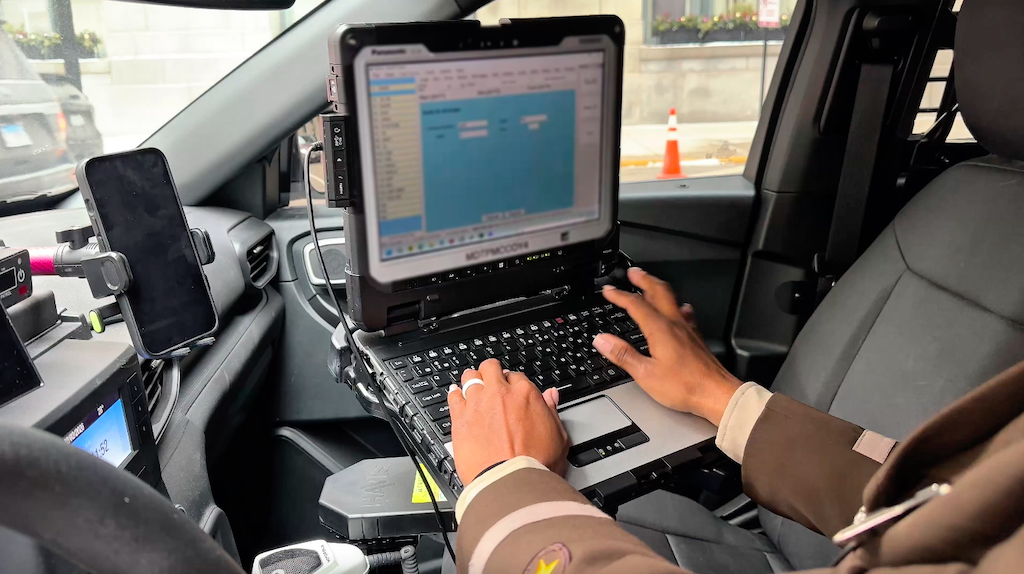
Clerk Mariyana Spyropoulos’ office has launched a new e-citation program that allows traffic citations to be transmitted to the circuit court clerk’s office electronically, which she said will cut down on delays and improve overall efficiency.
“This is a modernization effort that had been discussed for nearly a decade, and my administration delivered it within a year,” Spyropoulos said. “Our focus was on delivering practical improvements that make the court system work better for the public and for the clerks who keep it running every day.”
Under the current model, traffic citations need to be transmitted manually, a process that requires clerks to retype handwritten citations that were delivered in person. Those citations then don’t show up in the clerk’s system for seven-to-ten days.
The pilot program significantly reduces that timeline, allowing clerks to approve pre-filled citations which can now show up in their system within 24-48 hours.
Spyropoulos said her office processes around 1,200 citations per day and hundreds of thousands each year. She said payment options through the new program remain the same as they have always been — online, by mail or in person. The pilot launched in early December.
|
|
|
|
|
|
More From WTTW News:
|
|
 |
|
|
|
Back in the Day: February 5, 1971 - “Grease” Debuts at Kingston Mines
|
Whether it’s witnessing it onstage or via the popular 1978 film starring John Travolta and Olivia Newton-John, “Grease” is an American classic and one of the most iconic musicals. But did you know the production has roots in Chicago? On this day, 55 years ago, it was performed for the first time at Lincoln Park’s Kingston Mines. (Yes, the blues venue). Where the movie was set in Southern California, the original production looked at the lives of Chicago teenagers in the 1950s. Instead of Malibu’s sandy shores, creators Warren Casey and Jim Jacobs looked to Foster Avenue Beach. The entire production cost $200 to make. After its premiere on Feb. 5, 1971, Tribune critic Will Leonard said it was “one of the most screamingly funny shows in town.” The acclaim led to sold-out shows, and eventually, it’d be an enduring cultural phenomenon. It’d hit Broadway the following year, and while the feature film looked to the West Coast, it was still adapted and produced by Highland Park native Alan Carr.
|
|
|
|
|
This Week’s Arts and Culture Events
|
Every Thursday, WTTW News newsletter producer Josh Terry highlights his picks for the week’s must-see cultural events.
Josh Terry: It’s been the coldest stretch of Chicago weather in nearly 20 years. The last time temperatures were above 32 degrees was Jan. 16. That’s not ideal, but it’s worse to spend most of your winter days and nights hibernating at home. Netflix can wait! You owe it to yourself to experience enriching art, so why not try these curated events below happening this weekend?
Theatre: “The Dance of Death” — Steppenwolf Theatre
August Strindberg’s 1900 play "The Dance of Death" documents the toxic, tense and dissolving 25-year marriage between protagonists Alice and Edgar. The 2026 Steppenwolf revival of the production is the first time it has hit the city since 2014. It promises to be a nervy dose of enthralling domestic psychological warfare. Buy tickets here.
Comedy: Funny Ha-Ha — The Hideout
While it’s mostly known as a bastion of independent live music, the Hideout is also a great place to catch stand-up comedy. On Friday, a reading series turned comedy show called “Funny Ha-Ha” finds its performers reading written pieces, compiling PowerPoint presentations, or showing films instead of a typical tight five. Buy tickets here.
Dance: Eshanthika’s Living Room Mix: A Silver Lining Foundation Fundraiser — Empty Bottle
For the past few years, Chicagoan Eshanthika Wijesinha has been hosting a massive dance party to benefit A Silver Lining Foundation, which funds cost-free breast health screenings. Wijesinha, a breast cancer survivor, is a beloved figure and patron of the city's music community. She started these events not only to raise money for an essential cause but to celebrate another year being cancer-free. The party features over $10,000 worth of donated prizes for raffle from local businesses, along with stellar DJs like Title TK and more. To RSVP and get a free raffle entry, click here.
|
|
|
|
|
|
|
What's the one thing out-of-towners get wrong about
Chicago?
|
|
|
Email DailyChicagoan@wttw.com with your responses and your answers might be published.
|
|
|
|

|
Updates are in store for Grant Park. A new 20-year improvement plan for the city's "front yard" has been unveiled.
Fresh off his Grammy win for Album of the Year — Bad Bunny prepares for Superbowl history. Local Latinos join us to talk about his impact.
|
5:30 PM | 10:00 PM
|
|
|
|
Want more WTTW News content? Follow WTTW on Instagram to check in with us daily, go behind-the-scenes, and more.
|
Newsletter Producer: Josh Terry
|
|
|
|
|