Today’s Daily Chicagoan is brought to you, in part, by:
|

|
|
|
|
It’s Tuesday, and tonight at 5:30 p.m. WTTW News is hosting a candidate forum featuring all four candidates for Chicago Board of Education president. It's a historic election, and we explain why.
|
|
|
|
|
 |
(WTTW News)
|
As summer comes to a close, Chicago is staying on pace with last year’s historically low violent crime numbers.
The Chicago Police Department has reported the fewest number of homicides in June, July and August since 1965. But as crime numbers continue to drop, public safety remains a major concern for Chicagoans.
“One homicide is too many,” said Emmanuel Andre, deputy mayor of community safety. “It is the whole approach, like this idea of the ecosystem of public safety. So you have government working better together, first responders working better together, all of that is absolutely critical to continue to be able to move the needle and continue to keep us in this right direction that we’re moving in.”
More context:
Despite overall crime being down throughout the city, there has been a recent uptick in shootings on the city’s West Side and a recent mass shooting in Washington Park.
A recent NORC at the University of Chicago poll said 44% of Chicagoans think crime is going up, despite CPD data saying otherwise.
Carrie Steiner, former CPD officer and founder of First Responders Wellness Center, said the lower crime statistics could be the result of underreporting.
“Personally, I don’t think the numbers are accurate,” Steiner said. “What I’m hearing from a lot of my Chicago police friends is that they’re saying in the community people are saying they don’t call the police anymore because nothing gets done.”
Andre said while he doesn’t agree with claims that the data is inaccurate, he does believe that safety is more than just crime stats.
Earlier this summer, teen takeovers returned to the city, spurring concerns from parents and action from community violence intervention groups.
Christa Hamilton, president and CEO of UCAN, said social media is playing a major role in youth violence prevention.
“We have to be on social media as much as they are on social media,” Hamilton said. “We have to be watching and tracking their activity. … My team was chasing teen trends across the city because social media is a gift and a curse. Information moves quickly, but we have access to the information as well.”
|
|
|
|
|
Sponsor Message
|
|
On Tuesday, September 22nd, 5 pm to 8 pm, join Full Spectrum Education, Northeastern Illinois University’s Goodwin College of Education, and NEIU Libraries for the launch of “Reckoning with Redress,” a cinematic digital history project on the Japanese American Redress Movement.
The event also commemorates the 45th anniversary of the Commission on Wartime Relocation and Internment of Civilians hearings held on Northeastern Illinois University’s Main Campus. Refreshments, Taiko drumming performance, film screenings of “Enough” and “Reckonings,” and a panel discussion are scheduled.
This free event is part of the “Reckoning with Redress” exhibition, ongoing through October 31st.
RSVP at NEIU.edu/reckoning-redress.
|
|
|
|
|
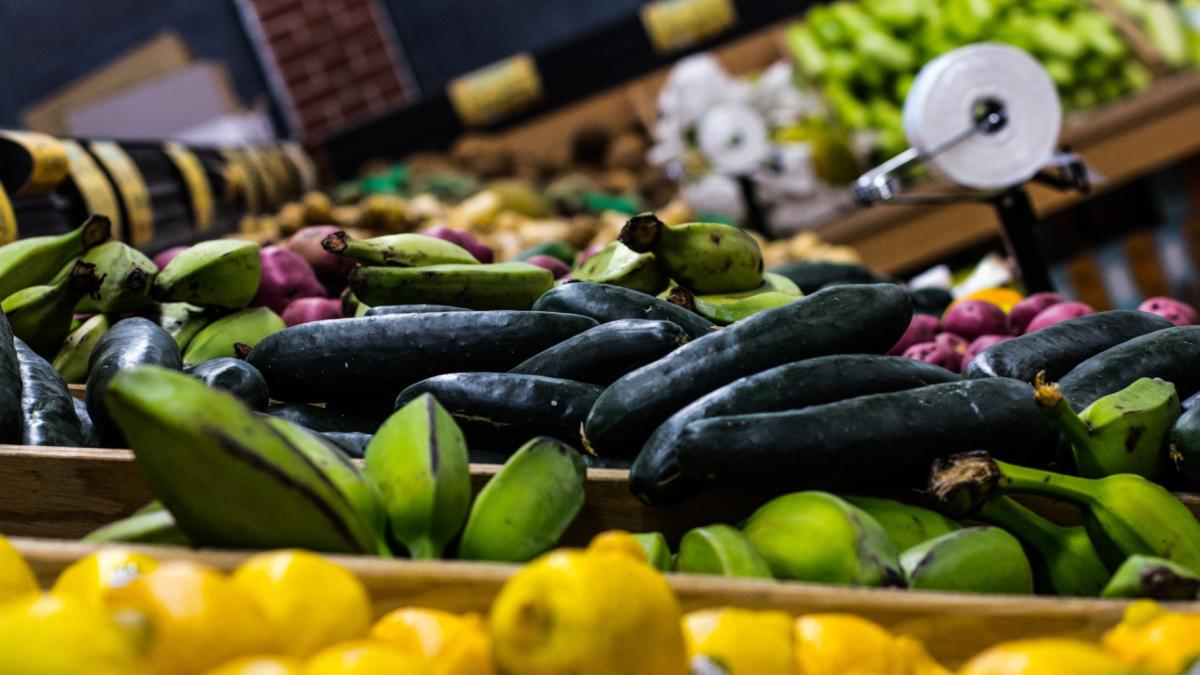 |
A file photo of a Chicago market. (LMM / iStock)
|
Food insecurity is worsening in Chicago as more than 1 in 3 households struggle to put food on the table, according to a report released Monday by the Greater Chicago Food Depository.
The findings come amid federal cuts to safety net programs like the Supplemental Nutrition Assistance Program, along with rising costs and insufficient wages, which are forcing residents to choose between groceries and other essentials like housing and medicine, according to the report.
More context:
The report found 36% of Chicago households, or about 417,000 households, lack consistent access to enough food, with families with children being at even greater risk.
Nearly half, or 47%, of households with children are struggling to put food on the table compared to 30% of households without children, the report found.
“It underscores the lived experience behind the data: parents are skipping meals so their children can eat, older adults are stretching fixed incomes as rent and grocery bills rise, working families are doing everything they can and still coming up short,” Kate Maehr, executive director and CEO of the Greater Chicago Food Depository, said in a statement.
The report found that while food insecurity is citywide, inequities remain stark. The South Side (51%), West Side (45%) and Southwest Side (41%) have higher rates of food insecurity than the Northwest Side (27%) and North Side (20%).
The report, released in partnership with NORC at the University of Chicago, is based on a June survey of 1,200 Chicago residents. View the full report here.
The food bank has called for the reversal of the cuts to food and healthcare programs, or at minimum, the delay of the SNAP cost shift to states for two years, so states have time to secure the funding needed to keep basic food assistance available.
|
|
|
|
|
|
|
|

|
Chicago Police Supt. Larry Snelling talks to the news media following a meeting of the Community Commission for Public Safety and Accountability on Thursday, April 2, 2026. (WTTW News)
|
Former Supt. Larry Snelling will collect an annual city taxpayer-funded pension of approximately $190,000, according to records obtained by WTTW News.
Snelling, who was a member of the Chicago Police Department for 34 years, resigned July 15.
Snelling, 57, received his first monthly pension payment of $15,744.73 on Aug. 31, and those payments will continue for the rest of his life, according to records obtained by WTTW News from the Policemen’s Annuity and Benefit Fund of Chicago. Every year, Snelling’s pension will increase by 3%, to keep pace with any increase in the cost of living, records show.
Snelling retired approximately two months before he would have maximized his pension benefit, records show. Nevertheless, his pension is the third largest being paid by the police pension fund.
In his statement announcing his retirement, Snelling did not give a specific reason for stepping down as the city’s top cop, but said it was time to close “this chapter in my life.”
Mayor Brandon Johnson tapped Fred Waller to replace Snelling until a permanent replacement can be named.
Waller has been collecting an annual city taxpayer-funded pension of $141,608 while he also has been earning more than $210,648 per year annually, bringing his total annual compensation to $352,256, according to records obtained by WTTW News.
|
|
|
|
|
|
More From WTTW News:
|
Chicago Bears coach Ben Johnson said last month that winning the Super Bowl isn’t enough for him. He wants to have the highest-scoring offense in NFL history. If the Bears can put together more weeks like their opener, that goal will be within reach, AP reports.
|
 |
|
|
|
Back in the Day: September 15, 1971 - Site of Chicago Fire Origin Designated a City Landmark
|
On Oct. 8, 1971, a fire started on the city’s Southwest Side in a barn on DeKoven Street near Jefferson Street owned by Patrick and Catherine O’Leary, two Irish immigrants from Kerry. Though the exact cause of the fire is still unknown today, the blaze swept through the city, destroying 17,000 buildings, leaving 100,000 homeless and killing 300 people. It lasted two days and dramatically transformed the city, paving the way for fire-resistant rebuilding and pioneering the modern skyscraper. On this day 55 years ago, on the 100th anniversary of the tragedy, Chicago designated the site as a city landmark. Today, Chicago’s Fire Department Training Academy stands on the
site.
|
|
|
|
|
This Week's Staff Recommendations
|
Every Tuesday, WTTW News staffers highlight their favorite things around Chicago. This week, it’s McCarter Fellow Jessica Watts on her favorite spots in the western suburbs.
Jessica Watts: Unlike other DuPage County residents who claim to be from the city because they “only live 30 minutes away,” I am a proud suburbanite. Of course, Chicago has some of the best food there is, but don’t sleep on the ‘burbs! Great chefs like their peace and quiet away from the hustle and bustle of city life, too. Here are some of the food spots in the western suburbs that I think are worth the drive from the city.
Tong’s Tiki Hut: This Villa Park hidden gem is an oldie, but a goodie. My parents went on dates here back in the '80s, and now it is my favorite place to take just about everyone I know. Incredible vibes and even better food, this Polynesian-themed spot is a must-try for anyone who is craving Chinese or Cantonese food. And with portions as big as theirs, you’ll be glad to have plenty of time to digest on your drive home. Best eggrolls I’ve ever had. 100 E. Roosevelt Road, Villa Park
Q’s Restaurant and Pizzeria: There is not a bad food item on the menu at this Hillside staple. No wonder it’s been around since 1959! Proud to say I ordered their double dough pizza on a weekly basis for longer than I care to admit. As an Italian, I am very picky about my pasta, but this is the real deal. It’s not Tuscany, but the food still feels like home. 4841 Butterfield Road, Hillside
Mickey’s Drive-In: Mickey's has just about any classic food you could want. Aside from being one of the most iconic places in Bellwood, its Italian beef rivals some of the most renowned in the city. Ultimately, the authenticity (and mouth-watering french fries) makes it worth the wait. 635 N. Mannheim Road, Bellwood
|
|
|
|
|
|
|
What's your favorite spot to grab coffee in the city?
|
|
|
Email DailyChicagoan@wttw.com with your responses and your answers might be published.
|
|
|

|
|
5:30 PM | 10:00 PM
|
|
|
Want more WTTW News content? Follow WTTW on
Instagram to check in with us daily, go behind-the-scenes, and more.
|
Newsletter Producer: Josh Terry
|
|
|
|
|