|
|
|

|
An aerial view from the southwest of a proposed Chicago Bears stadium and entertainment district in Arlington Heights. (Credit: Hart Howerton / Chicago Bears)
|
A proposal under consideration by state lawmakers that would grant the Chicago Bears a property tax break on a stadium in Arlington Heights to keep the team from moving to Indiana would likely reduce the football team’s annual tax bill by $39 million, according to a new analysis from Cook County Treasurer Maria Pappas’ office.
That would translate into tax breaks of more than $1.5 billion during the 40-year term of the agreement, under the terms of the so-called “megaproject” bill, according to the analysis.
With five days left in the Illinois General Assembly’s spring session, the fate of the legislation appears uncertain, even as Gov. JB Pritzker told reporters before the Memorial Day holiday weekend that he was optimistic lawmakers would approve a plan to keep the Bears in Illinois.
More context:
The new analysis from Pappas’ research team is the first to attempt to put a price tag on the proposal that advanced through the Illinois House a month ago, only to face intense opposition from Mayor Brandon Johnson, who has continued to push for the Bears to stay in Chicago and blasted lawmakers’ focus on the megaprojects bill, calling it a “mismatch” with what residents want them to concentrate on.
Both the Bears organization and Pritzker said last week the team is certain to leave Soldier Field and Chicago — with the only question being whether the team will build a brand-new, 70,000-seat domed stadium in Indiana or the northwest suburbs.
The analysis released by Pappas’ office relies on an estimate of the market value of an Arlington Heights stadium crafted by Geoffrey Propheter, an associate professor at the University of Colorado Denver, an expert on publicly financed stadiums.
According to Propheter, a “conservative” estimate of the market value of a new Bears stadium would be $675 million. That would translate to an annual property tax bill of approximately $53.2 million, based on Arlington Heights’ current tax rate.
The heart of the bill being negotiated by state lawmakers would allow the Bears or other developers planning to invest at least $100 million in the effort to negotiate a payment in lieu of taxes, better known as PILOT, with local taxing bodies.
That would freeze the developer’s property tax bills for up to 25 years.
|
|
|
|
|
|
|
|
 |
Chicago Public Schools headquarters. (Michael Izquierdo / WTTW News)
|
Some policy analysts say CPS is responsible for its own deteriorating finances, arguing the district took on long-term recurring expenses based on one-time COVID-19 relief funds.
CPS leaders, meanwhile, cite rising pension payments and operating costs as factors for worsening the district’s finances. They argue those expenses would be manageable with greater support from state and federal leaders.
More context:
Michilla Blaise, a CPS board member representing District 5B, said the state’s own mechanism for assigning funds to school districts, the 2017 Evidence-Based Funding Formula, calls for CPS to be given $1 billion more than the amount currently outlined in Gov. JB Pritzker’s budget proposal.
“They got all the experts together, and they figured out how much CPS should be funded, and from their own funding formula, we’re over a billion dollars short,” Blaise said. “It’s not just CPS, it’s schools from around the state, and so we’re just encouraging them to ramp up their plan to increase the funding for CPS — just get us the funding sooner.”
Others argue that CPS and the Chicago Teachers Union have made a series of financial and political mistakes that contributed to the district’s dire financial situation.
Austin Berg, executive director of the Chicago Policy Center, said CPS leaders became hitched to one-time COVID-19 relief funds.
“The district really went on a hiring spree during COVID, against the advice of most financial experts,” Berg said. “They were adding a lot of recurring costs on one-time revenues that they knew would go away after the pandemic was over.”
Since 2019, CPS has added nearly 10,000 new staff positions. Student enrollment declined by 45,000 during that same period. In a letter to families, CPS CEO Macquline King said the additions have been important for improving outcomes, but added that “without federal pandemic aid to fund these positions, it has become extremely difficult to maintain the status quo.”
|
|
|
|
|
|
|
|
 |
(Medill School of Journalism)
|
Lucha libre, or “free wrestling,” is woven into the fabric of Mexico’s cultural identity. It’s an acrobatic, flamboyant and thrilling choreographed sport that melds athletics and theater to symbolize the ultimate battle between good and evil.
Arena México is called the “cathedral of lucha libre,” which appropriately characterizes both the nation’s reverence and the male-dominated nature of the sport across Mexico.
Luchadoras — female lucha libre wrestlers — challenge this machismo culture.
“When I step into the ring, Dulce Luna transforms,” said Dulce Luna, a luchadora who trains in Naucalpan, just outside of Mexico City. “… Inside the character I am an extroverted person. I’m not afraid of people. I do things that, as a person, I wouldn’t do.”
Lucha libre wasn’t always so easy to access. Women were banned from wrestling in Mexico City from 1954 to 1986. Outside the capital, promoters were penalized for booking female professionals.
Decades after the ban, Arena México is now painted with murals promoting female empowerment, but the ban’s legacy still affects women’s participation in the sport.
Lucha libre has spread across the world, and Chicago has become a hub in the United States. Lady Tigress, a Mexican American in the city, trains and competes with men.
“When you wear a mask, it changes who you are,” Lady Tigress said. “I feel like I’m this ferocious feline from the jungle who was willing to pounce and attack or chew up anyone in the heartbeat. The person behind this mask is, like, aching to be her in real life.”
Lady Tigress hopes to one day realize her greatest dream: wrestling in Mexico. “Mexico is mi pais (my country) whether I’m born there or not,” Lady Tigress said.
|
|
|
|
|
|
More From WTTW News:
|
|
 |
|
|
|
Back in the Day: May 26, 1959 - Bill Veeck’s White Sox “Martian” Stunt
|
Bill Veeck’s two stints as owner of the Chicago White Sox, from 1959-1961 and 1975-1981, were known just as much for his outrageous marketing stunts and PR antics as the team’s on-field success. (The team made a World Series appearance in 1959.) On this day 67 years ago, Veeck, who was known as the “Barnum of Baseball,” decided to host a themed “Martian Night” at Comiskey Park. Before a game hosted against Cleveland, Veeck hired four little people dressed in “alien” garb to helicopter into the stadium and “kidnap” White Sox players Nellie Fox and Luis Aparicio. One of the “Martians” was Eddie Gaedel, a 3-foot, 7-inch man and frequent Veeck collaborator who
became the shortest player to ever appear in a Major League Baseball game. While the Sox lost that game 3-0, the stunt was performed in front of 40,018 people.
|
|
|
|
|
This Week’s Staff Recommendations
|
|
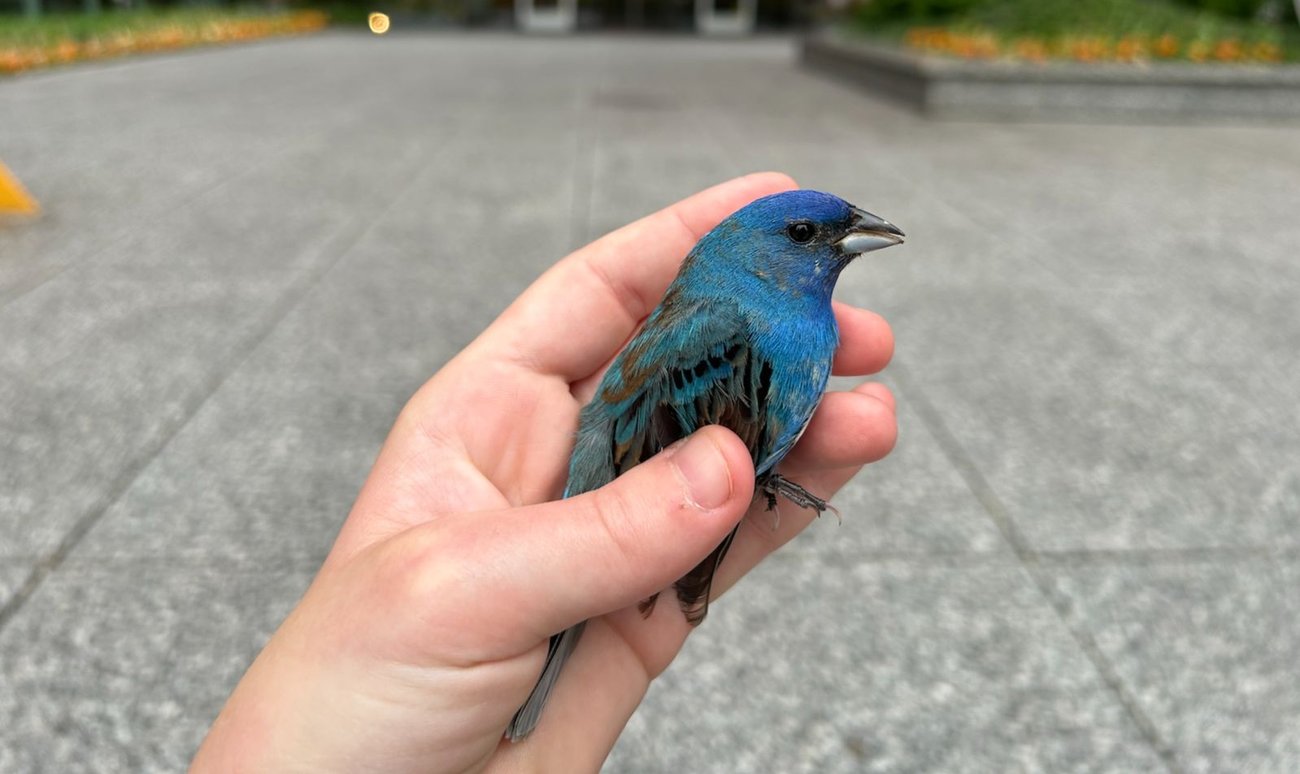
An indigo bunting (Blair Paddock / WTTW News)
|
Every Tuesday, WTTW News staffers highlight their favorite things in Chicago. This week, it’s reporter Blair Paddock on their favorite migratory birds that you can find in the city right now.
Blair Paddock: Last week alone, millions of birds flew over Cook County. We are in the midst of peak bird migration season. In the coming days, I suggest that you spend some time outside: look at your nearest tree, shrub or tall grass to find one of the following birds.
1. Indigo bunting: A bird whose bright blue colors suggest that it is too tropical to land in the Midwest. The indigo bunting looks like a scrap of sky and has a lively chirp. Last week, I found this bird downtown while volunteering with Chicago Bird Collision Monitors. It was lying on its side, presumably stunned from hitting the glass at the Optima Signature luxury apartment building. I picked it up and it immediately came back to life and will probably be just fine after a visit to the rehab center.
2. Blackburnian warbler: If you go outside this week, you are bound to see some type of warbler. But I think that this fiery bird might be the crown jewel. On its head and breast, bright orange and yellow patches stand out in comparison with the black racing stripes around its eyes and wings. This five-inch bird comes to Chicago after spending the winter in South America on coffee plantations.
3. Wilson’s warbler: I have not had the pleasure of seeing this black-capped warbler yet, but I think I’ll lose it once we meet. It’s a bright yellow warbler that makes a lasting impression, with a crown that looks like a jet-black toupee. The bird has a sharp, flitting chirp.
|
|
|
|
|
|
|
What's your favorite small concert venue in the Chicago area? Tell us why.
|
|
|
Email DailyChicagoan@wttw.com with your responses and your answers might be published.
|
|
|
|

|
|
5:30 PM | 10:00 PM
|
|
|
|
Want more WTTW News content? Follow WTTW on Instagram to check in with us daily, go behind-the-scenes, and more.
|
Newsletter Producer: Josh Terry
|
|
|
|
|