Happy Friday. End your week with these recent stories from WTTW News.
|
|
|
|
|
|
|
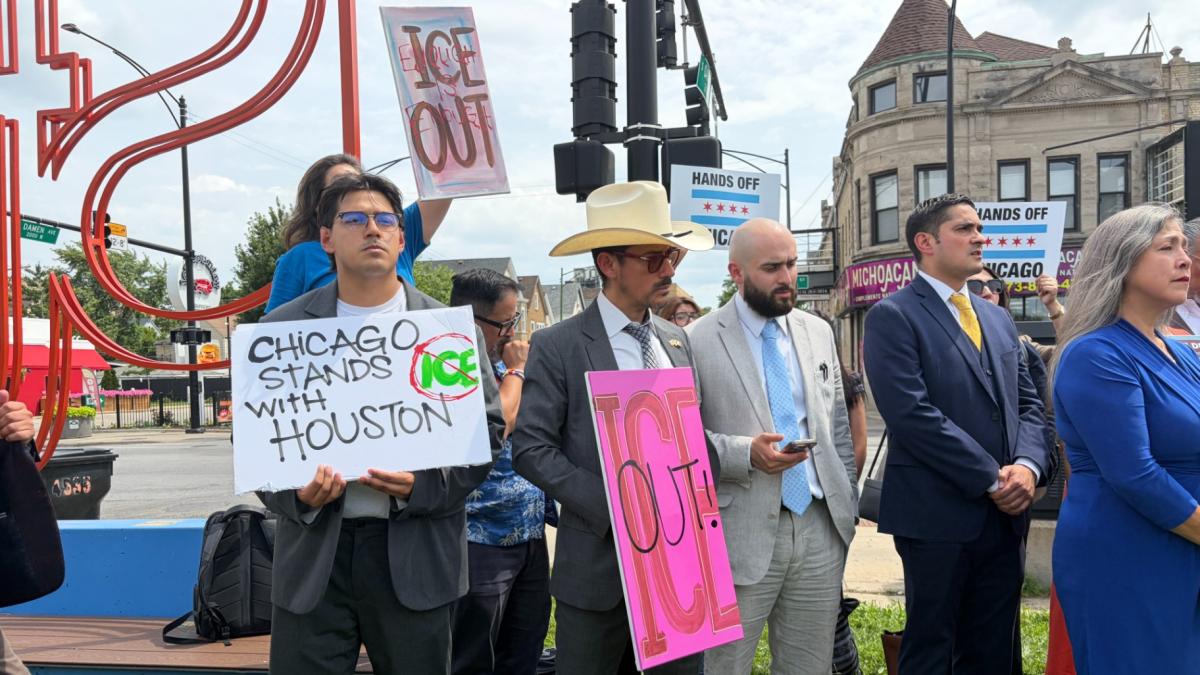
Advocates hold signs during a news conference in the Back of the Yards neighborhood on July 9, 2026, to discuss an increased resurgence in federal immigration enforcement activity in the surrounding area. (Eunice Alpasan / WTTW News)
|
Reports of immigration-related arrests around the country surged at the end of June, including 10,000 arrests over a five-day period.
Although the shows of force in Chicago might not compare to what residents saw during “Operation Midway Blitz,” immigrant rights advocates say they are seeing the impact. And while some aspects of enforcement have changed, community groups are building on the same support networks they cultivated over months and years.
“What I love about Chicago is that we continue to show up strong for our neighbors,” said Ellen Zhou, a community organizer with Asian Americans Advancing Justice Chicago. “Some of the infrastructure that was built — especially around mutual aid and these rapid response networks — continues.”
“And even though we don’t have the national attention in the same way before,” Zhou said, “the volunteers and neighbors who have stepped up during the fall continue to step up today.”
More context:
According to data tracked by the Resurrection Project, requests for legal assistance related to immigration detainments in Illinois doubled in June compared to the previous months.
“It’s affecting our working class, a lot of our vendors are being detained. … They’re starting to not come outside to vend, they’re terrified,” said Maria Orozco, outreach coordinator at Street Vendors Association of Chicago.
Orozco said some arrests still mimic what residents witnessed during “Midway Blitz,” where groups of masked federal agents make arrests on the street.
A group of immigrant advocates is calling on judges to give more flexibility with remote court hearings as federal immigration enforcement agents shift to targeting more immigrants at courthouses and immigration check-ins, advocates said during a Thursday news conference.
“They are targeting people who are doing everything by the rules,” Resurrection Project President and CEO Raul Raymundo said. “This is not justice. This is cruelty and fundamentally un-American.”
The advocates gathered in the Back of the Yards to sound the alarm amid an uptick in Immigration and Customs Enforcement activity on the Southwest Side, including in nearby Gage Park and Brighton Park.
Advocates reminded individuals to know their rights, create emergency plans and look out for neighbors.
“Let’s be clear, 'Midway Blitz' never ended,” Illinois Latino Agenda Co-Chair José Muñoz said.
|
|
|
|
|
Sponsor Message
|
|
The Chicago Symphony Orchestra returns to Ravinia this summer for its 90th summer residency, featuring world-class performances, celebrated conductors, and unforgettable nights in the newly transformed Hunter Pavilion. Plan an evening of extraordinary music in one of Chicago's most beloved outdoor settings. Get tickets at www.ravinia.org!
|
|
|
|
|
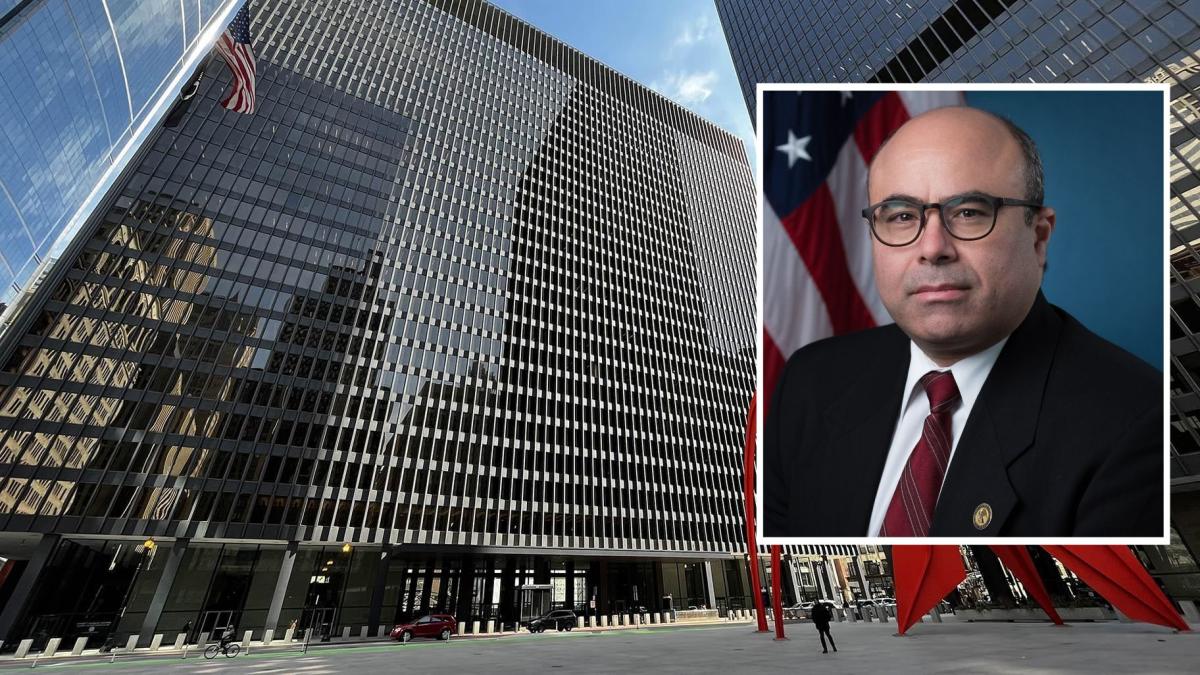 |
(Department of Justice, Capitol News Illinois)
|
A federal judge has found Chicago’s U.S. Attorney Andrew Boutros committed a “clear violation” of a court order when he openly discussed a criminal complaint in a kidnapping and murder case that remained under seal last week.
Boutros appeared Thursday morning inside a packed 25th-floor courtroom before Magistrate Judge Laura McNally, who found her sealing order in the case “was not honored” when he discussed the charges filed against three reputed Tren de Aragua members last week.
McNally found Boutros did not act in “open defiance” or with any “nefarious intent” when he spoke about the case at a Washington D.C. press conference last week and made clear there would be no further investigation, sanctions or consequences.
But she took issue with the embattled federal prosecutor’s explanation about why her order was violated.
Boutros said the way things played out was “all very regrettable and very unfortunate because like you, I take very seriously orders and orders from the court.”
“I always have,” he said, “and I always will.”
Some backstory:
Thursday’s hearing marked the second time in recent months Boutros has appeared before a federal judge upset by his office’s conduct, following the abrupt dismissal of the “Broadview Six” case, which was torpedoed by allegations of grand jury misconduct and a subsequent cover up levied against federal prosecutors.
He has since faced repeated calls for his resignation from elected officials, most recently by members of the Chicago City Council.
Boutros filed a motion himself Wednesday asking McNally to strike Thursday’s hearing, arguing there was “no need” for it because he had acted in “good faith” and “there has been no harm to any defendant or law enforcement officer” by speaking about the case.
In that motion, Boutros claimed that he believed the press announcement “complied with the letter and spirit of the sealing order,” as it dealt with facilitating “the enforcement of criminal law.”
McNally denied that request and ordered Boutros to appear in order to “remind leadership, including you” that sealing orders “must be scrupulously followed.”
Boutros said he took McNally’s concerns “very seriously” and pledged to re-examine the series of events to “see how we can do better.”
|
|
|
|
|
|
|
|
|
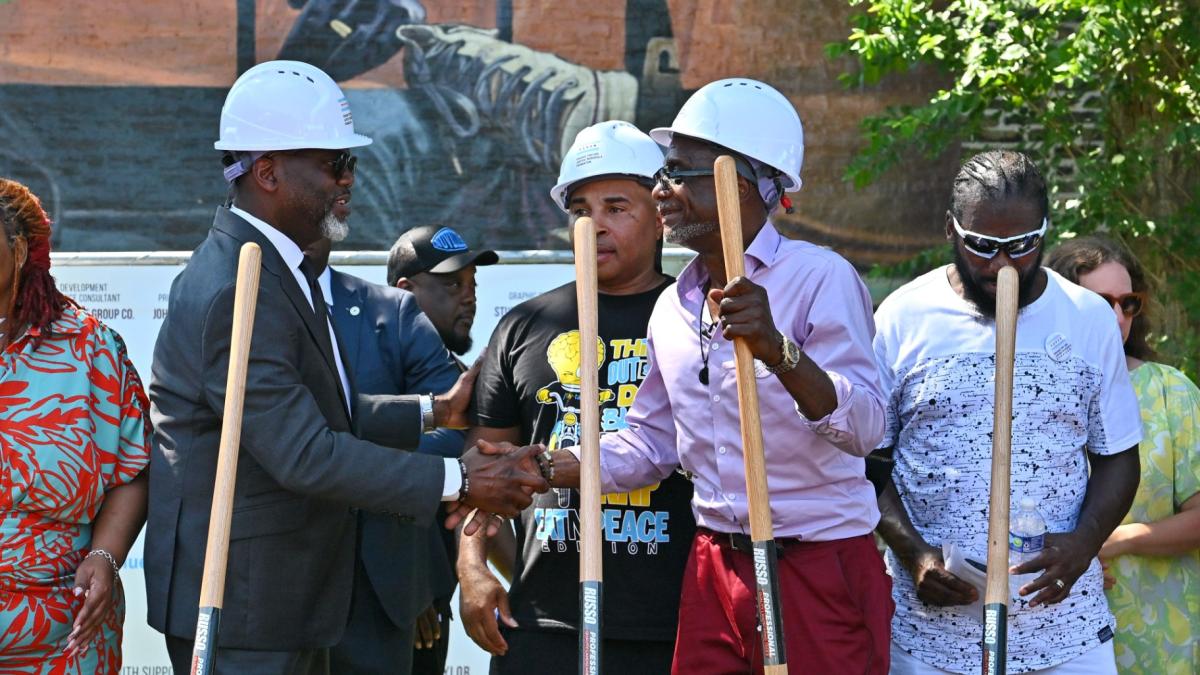
Chicago police torture survivor Stanley John Howard, right, shakes hands with Mayor Brandon Johnson, left, during a groundbreaking ceremony for the Chicago Torture Justice Memorial at 5520 S. King Drive in Washington Park on July 8, 2026. (Victor Hilitski / WTTW News)
|
Survivors who were tortured by Chicago police officers from the 1970s to the 1990s, and who continue to fight for recognition and justice, gathered Wednesday for a groundbreaking ceremony for a new memorial that aims to ensure their stories are not forgotten.
The memorial honors the more than 125 Black men, women and children who were tortured by disgraced former Chicago Police Commander Jon Burge, and the officers under his command, on Chicago’s South Side at Area 2 and 3 police headquarters from the 1970s to 1990s.
“When we use the word torture, we don’t do so lightly, flippantly, and we are not exaggerating,” said Joey Mogul, board president of the Chicago Torture Justice Memorials Foundation and an attorney who represented torture survivors.
Mogul on Wednesday described how the torture used by police officers aimed to dehumanize and break the will of individuals in order to force confessions.
The memorial, to be located at 5520 S. King Drive in Washington Park, will include a timeline that tells of the story of the racist practice of torture by Chicago police officers, along with the organizing, litigation and journalism that exposed the truth and sought accountability.
Quotes from survivors and family members will be etched into surrounding pathways, and the monument will be surrounded by gardens and seating, organizers said.
|
|
|
|
|
|
More From WTTW News:
|
|
|
 |
|
|
|
Back in the Day: July 10, 1966 - Dr. Martin Luther King Jr.'s “Freedom Sunday” Rally at Soldier Field
|
For the Rev. Martin Luther King Jr., 1966 was the year of his “Chicago Campaign.” The minister, activist and civil rights icon had moved to the city to rally for economic justice and against widespread residential segregation in the area. On this day 60 years ago, King held a rally at Soldier Field called “Freedom Sunday.” Despite the scorching 98-degree weather, more than 30,000 attended to hear King say, “Our power is in our unity, the force of our souls, and the determination of our bodies.” The focus of his speech was to rail against poverty, Chicago slums, and corruption. He also called for increased civic engagement, saying, “we must make it clear that we will
purge Chicago of every politician, whether he be negro or white, who feels that he owns the negro vote rather than earns the negro vote.”
|
|
|
|
|
|
|
What's one touristy thing that every Chicagoan should do in the city?
|
|
|
Email DailyChicagoan@wttw.com with your responses and your answers might be published. Here's what you had to say:
“If one is physically able, walk from the Hancock Center south down Michigan Avenue to the steps of the Art Institute. Especially on a summer weekday lunch hour. There are so many beautiful buildings and so many people out enjoying the break in their day. It's really a wonderful and totally free thing to do.” — Nikki B.
“Billy Goat. Just because its unusual location. Then add on [its appearance on] SNL and the Cubs.” — John S.
“You don’t need a ticket to any museum or concert to just go hang out on the Museum Campus. Tourists and locals alike often come for one attraction and spend minimal time with the rest of it, but the whole of it is greater than the sum of its parts.” — Robert B.
“The CAC river tour!” – @heatherk.bsky.social
|
|
|

|
|
5:30 PM | 7:00 PM
|
|
|
Want more WTTW News content? Follow WTTW on
Instagram to check in with us daily, go behind-the-scenes, and more.
|
Newsletter Producer: Josh Terry
|
|
|
|
|