|
|
|
|
 |
|
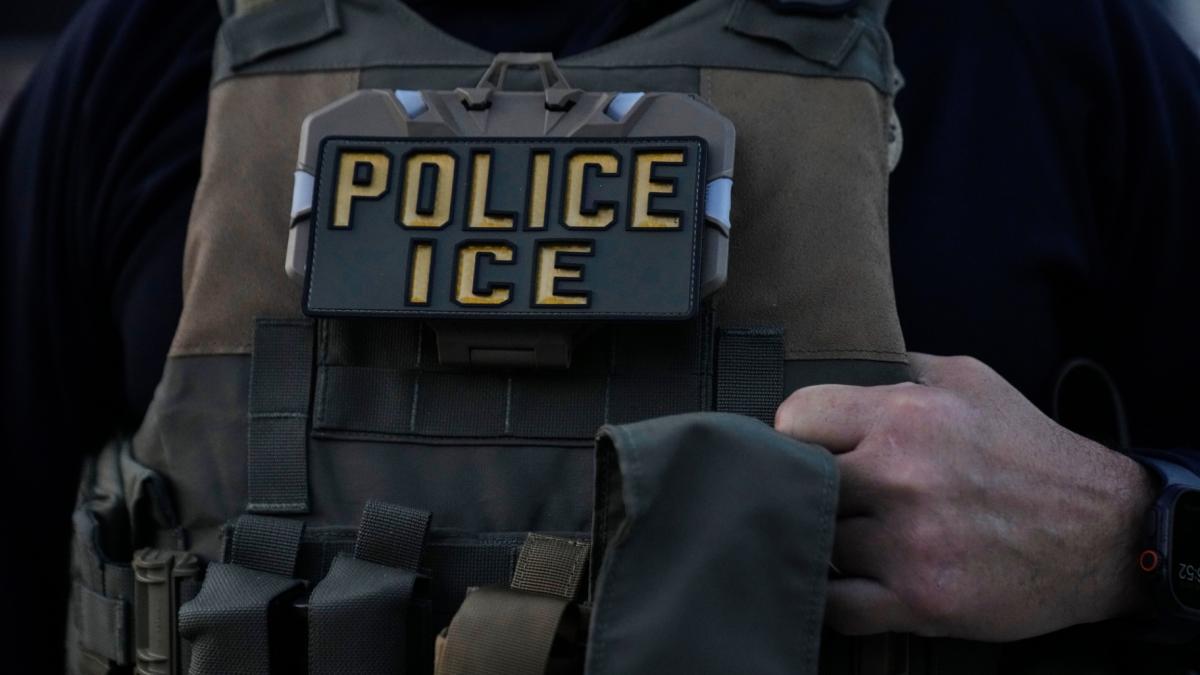
A U.S. Immigration and Customs Enforcement agent takes part in an early morning operation in Park Ridge, Ill., Friday, Sept. 19, 2025. (AP Photo / Erin Hooley) |
|
As headlines centered on Chicago, federal immigration agents have also fanned out across the suburbs, conducting a wave of coordinated enforcement under Operation “Midway Blitz” that brought the government’s immigration crackdown to residents’ doorsteps.
Controversial arrests have impacted the suburbs for months, including recent incidents involving pepper spray and traffic crashes. Lawsuits include an ongoing federal case related to use of force by immigration agents, and a case related to those in U.S. Immigration and Customs Enforcement custody.
Gov. JB Pritzker told reporters Tuesday that some U.S. Border Patrol officers, and their chief, Greg Bovino, may be soon leaving the Chicago area, but President Donald Trump is still working to expand “his onslaught against Americans” to other cities. Meanwhile, immigration enforcement activities are expected to continue in the area.
To better understand how suburbs are dealing with concerns around immigration enforcement activities, WTTW News reviewed public meeting minutes, official communications and news reports about raids across the area.
What happened?
Federal officers have hit the suburbs since this operation kicked off in September. Activity has been reported in suburbs of Cook, DuPage, Kane, Lake, McHenry and Will counties. Recent reports also describe detentions in southern Illinois in addition to the flurry of activity across Chicago.
Just days after “Midway Blitz” launched, Chicago’s suburbs became the center of national conversation when a traffic stop turned deadly on Sept. 12 in Franklin Park, where about three out of five residents are Hispanic.
After the fatal shooting of Silverio Villegas-Gonzalez during a traffic stop in the suburb near the northwest edge of Chicago, local officials, including Pritzker, called for an investigation into the case, which involved what they characterized as a changing narrative with a lack of transparency from the U.S. Department of Homeland Security and related agencies.
Following constantly aggressive enforcement across the area, many suburbs passed or considered policies to limit federal access. Evanston passed legislation in October designating city property as being an ICE-free zone. Wheeling passed a resolution Nov. 3, and a committee in Aurora approved a similar measure earlier this month that will be considered by the whole City Council Wednesday evening. |
|
|
|
|
|
|
|
 |
|
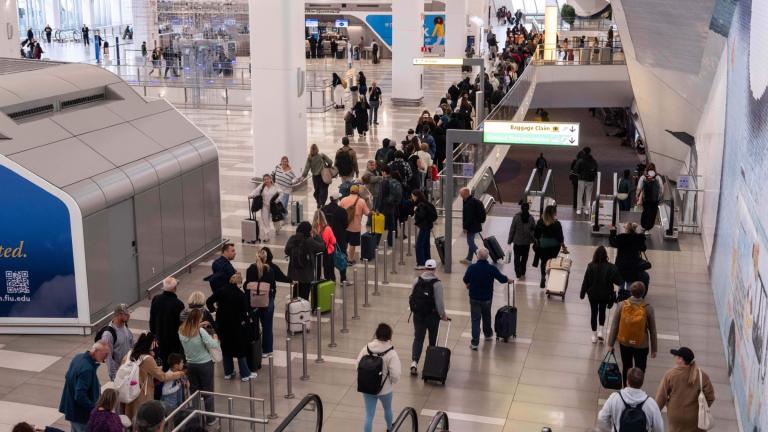
People wait in line at a Transportation Security Administration (TSA) security checkpoint at LaGuardia Airport (LGA) in the Queens borough of New York, Sunday, Nov. 9, 2025. (AP Photo / Adam Gray) |
|
Air travelers should expect worsening cancellations and delays this week, even if the government shutdown ends, as the Federal Aviation Administration moves ahead with deeper cuts to flights at 40 major U.S. airports, officials said.
Controller shortages led to average delays of four hours at Chicago O’Hare and 45 minutes in Las Vegas on Monday, with the FAA warning of staffing issues at more than a dozen towers and control centers that could cause additional disruptions in cities including Philadelphia, Nashville and Atlanta.
President Donald Trump pressured controllers Monday on social media to “get back to work, NOW!!!” The president said he wants a $10,000 bonus for controllers who’ve stayed on the job every day and to dock the pay of those who didn’t.
Robert Mark, a former pilot and air traffic controller, said it’s unreasonable for the president to expect controllers to keep working without pay.
“He has never worked in a job like this,” Mark said. “These people have been struggling to pay their bills and he has no idea what it’s like for someone to work six-day weeks and 10-hour days and still have to try to find time for another job driving an Uber delivering things in order to pay the bills.”
The reductions have resulted in thousands of canceled flights and increased delays — including a ground stop at O’Hare — according to Northwestern University civil engineering professor Joseph Schofer.
“The one thing that we don’t talk about much is, in addition to the several thousand flights that are canceled, flight delays are up very considerably,” Schofer said. |
|
|
|
|
|
|
|
 |
|
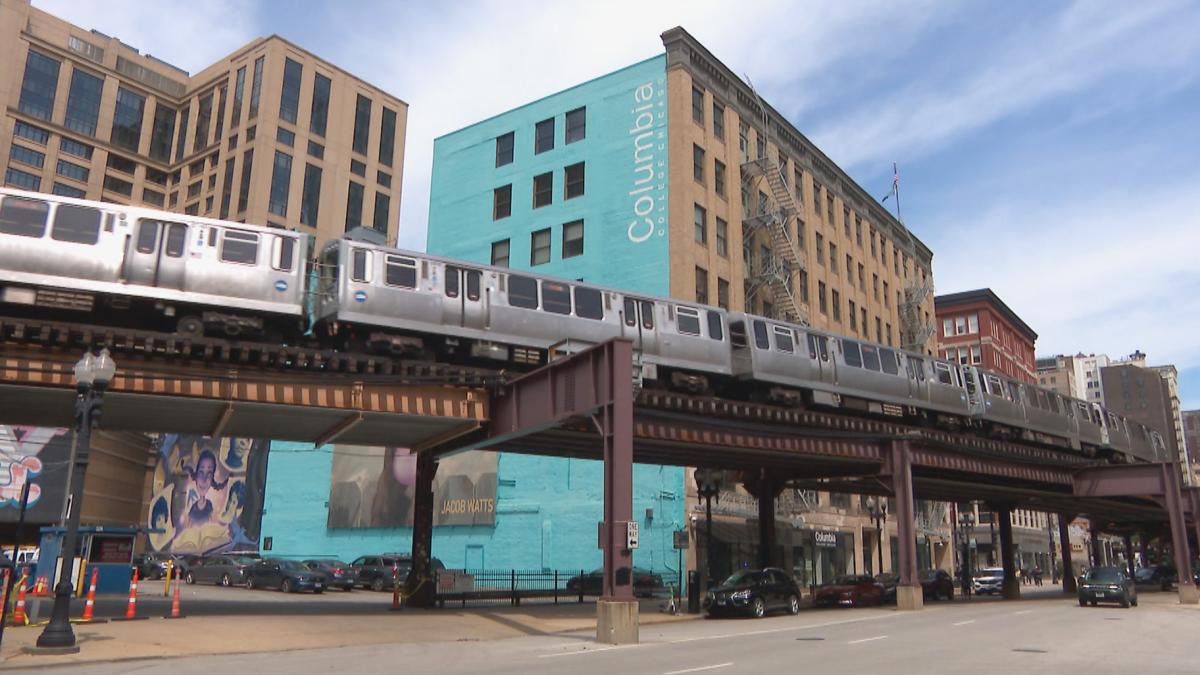
File photo of a CTA train in Chicago. (WTTW News) |
|
The Chicago Transit Authority board on Wednesday approved a 2026 budget with no service cuts, fare increases or layoffs, averting a feared doomsday scenario after the Illinois General Assembly came through with badly needed money to fill a transit budget gap.
That measure, approved during the fall veto session less than two weeks ago, also includes a huge influx of new public cash for CTA, Metra and Pace — but that money, earmarked for a slate of service improvements, won’t be coming into transit agency coffers immediately, officials cautioned.
More context:
The 2026 budget reverses a proposed 10% fare increase but does maintain some $60 million in cost savings previously identified. It also makes permanent the regional day pass allowing a single, discounted 24-hour fare across CTA, Metra and Pace, as well as a program allowing paratransit users to ride for free on fixed routes. The budget includes additional station overhauls as part of the “Refresh and Renew” program and work to upgrade the Blue Line’s Forest Park Branch.
As CTA awaits the cash influx it expects in 2026, the agency can begin to plan, hire and develop new schedules for the various service boosts under consideration. Among those: 24-hour Orange Line service to Midway Airport; improving overall train frequency; expanding a network of high-frequency buses from 20 to 30 routes; standing up a staff of five to support equitable transit-oriented development; and a Safe Ride Ambassador program aimed at deescalating crisis situations, connecting riders with needed support services and improving relationships with passengers overall. |
|
|
|
|
|
|
|
-
Kat Abughazaleh, who is running to represent Illinois’ 9th Congressional District, pleaded not guilty to federal charges after she and nearly a half-dozen others were arrested and accused of interfering with Immigration and Customs Enforcement operations.
|
|
|
|
|
|
|
Back in the Day: Nov. 13, 1909 - Cherry Mine Disaster
|
|
In 1905, the St. Paul Mine Company opened a coal mining operation in Cherry, Illinois, and within a few years, the plant was producing more than 1,500 tons of coal a day. It was one of the busiest and most modernized mines in the country, and it was adorned with electric lights, which the company erroneously claimed were "fireproof." On Nov. 13, 1909, 480 men and boys were toiling in the mine when a hay cart was stationed too close to a kerosene lamp and caught fire. The fire raged for 45 minutes before there was any attempt to evacuate the workers. While 20 were rescued a week later, 259 died. They left behind 160 widows and 390 children. While the tragedy didn't lead to any charges, the death toll and the company's resistance to support its victims forced the Illinois legislature to pass a Mine Safety Act and a Workers Compensation bill. It remains the third most disastrous mining accident in American history.
|
 |
|
|
|
|
This Week’s Arts & Culture Events |
|
Each Thursday, WTTW News producer Josh Terry highlights the city’s must-see cultural events.
Josh Terry: This week, Chicago experienced a surprise lake effect snowstorm (including “thundersnow”), multiple aurora borealis sightings, and now mild temperatures that look to break 60 degrees over the weekend. While the city’s weather might be erratic and volatile, one thing you can always count on is having a local cornucopia of diverse, eclectic and essential cultural events to attend. From a film festival to a cantata and a left-leaning stand-up comic, here are a few arts picks for your week.
Film: Black Harvest Film Festival — Gene Siskel Film Center
The 31st annual Black Harvest Film Festival opened last week and has a packed slate of global, under-the-radar and excellent film programming at the Gene Siskel Film Center until Sunday. Close out the weekend with a screening of Ossie Davis’ 1972 feature “Black Girl.” Tickets and the full festival schedule can be found here.
Orchestra: “Carmina Burana” — Lyric Opera
Over three performances, the Italian conductor Enrique Mazzola leads the Lyric Opera Orchestra and Chorus for a take on Carl Off’s 1905 cantata “Carmina Burana.” The 65-minute piece will be sung in its original Italian with projected English subtitles. Tickets for the Friday, Sunday and Tuesday shows can be found here.
Comedy: Hari Kondabolu — Den Theatre
You might recognize comedian Hari Kondabolu from his work on Comedy Central’s “Totally Biased With W. Kamau Bell,” his podcast with “Bell Politically Re-Active” or his documentary “The Problem with Apu.” Whatever it may be, he’s always funny, righteous and scathingly biting. On Saturday, he tapes his new comedy special at The Den Theatre. Buy tickets here.
|
|
|
|
|
|
|
|
|
What’s your favorite place for tavern-style pizza in the Chicago area? Tell us where and why.
|
|
|
|
Email DailyChicagoan@wttw.com with your responses and your answers might be published.
|
|
|
|
 |
|
|
|
5:30 PM | 10:00 PM |
|
|
|
|
Want more WTTW News content? Follow WTTW on Instagram to check in with us daily, go behind-the-scenes, and more. |
|
Newsletter Producer: Josh Terry |
|
|
|
|