It’s almost Friday. Dry off from the rain with these stories from WTTW News.
|
|
|
|
|
|
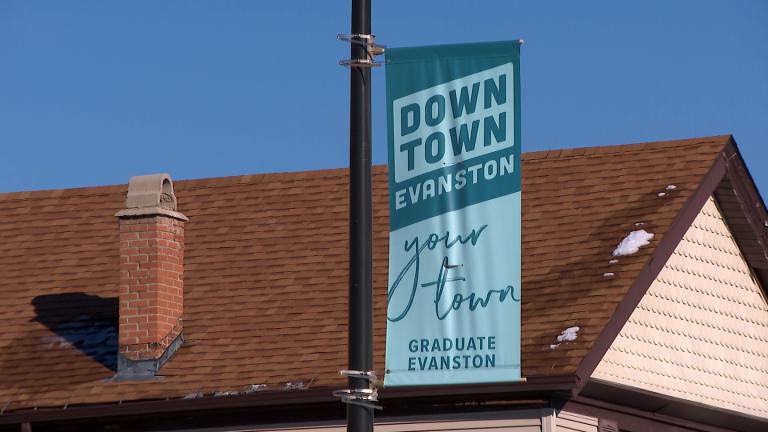 |
The city of Evanston is pictured in a file photo. (WTTW News)
|
The Trump administration is putting its weight on ending a reparations program in Evanston aimed at addressing the legacy of housing discrimination experienced by Black residents.
The program, launched in 2021, aims to provide payments to Black residents and descendants of Black residents who experienced housing discrimination in the city between 1919 and 1969.
Last week, the U.S. Department of Justice filed to join an existing lawsuit challenging the program.
Christine Svenson, local counsel at Judicial Watch, whose organization represents the plaintiffs in the lawsuit challenging the Evanston program, said she believes the U.S. filing a motion to intervene helps the lawsuit.
“This is a pioneer test case,” Svenson said. “All over the country there are various municipalities, and perhaps even states, that are considering these issues and everyone’s looking towards this case, and so it is a big statement move that the DOJ decided to join, and it sends a statement out to these other municipalities around the country.”
Some backstory:
The lawsuit challenging the Evanston program was filed in 2024.
The lawsuit argues that the program violates the Equal Protection Clause of the 14th Amendment by using race as an eligibility requirement. In its motion to intervene, the U.S also argues the city of Evanston has violated the Fair Housing Act by offering and providing financial assistance for housing because of race.
A city of Evanston spokesperson said in a statement, “The City of Evanston maintains its position on the legality of the Evanston Reparation Program. While we are cognizant of the filing made by the DOJ, the City does not provide comments regarding active litigation.”
Xavier Ramey, CEO of the social impact consulting firm Justice Informed, said Evanston having a reparations program shows the city has a governmental interest in repairing the racial harms experienced by Black residents.
“They were saying we cannot move forward as a township, as a city,” Ramey said. “We cannot move forward with Black residents as our neighbors, as our countrymen, as our friends, unless we actually do the work of relational and economic repair, and I think that’s something that deviates greatly from the current federal administration.”
|
|
|
|
|
|
|
|
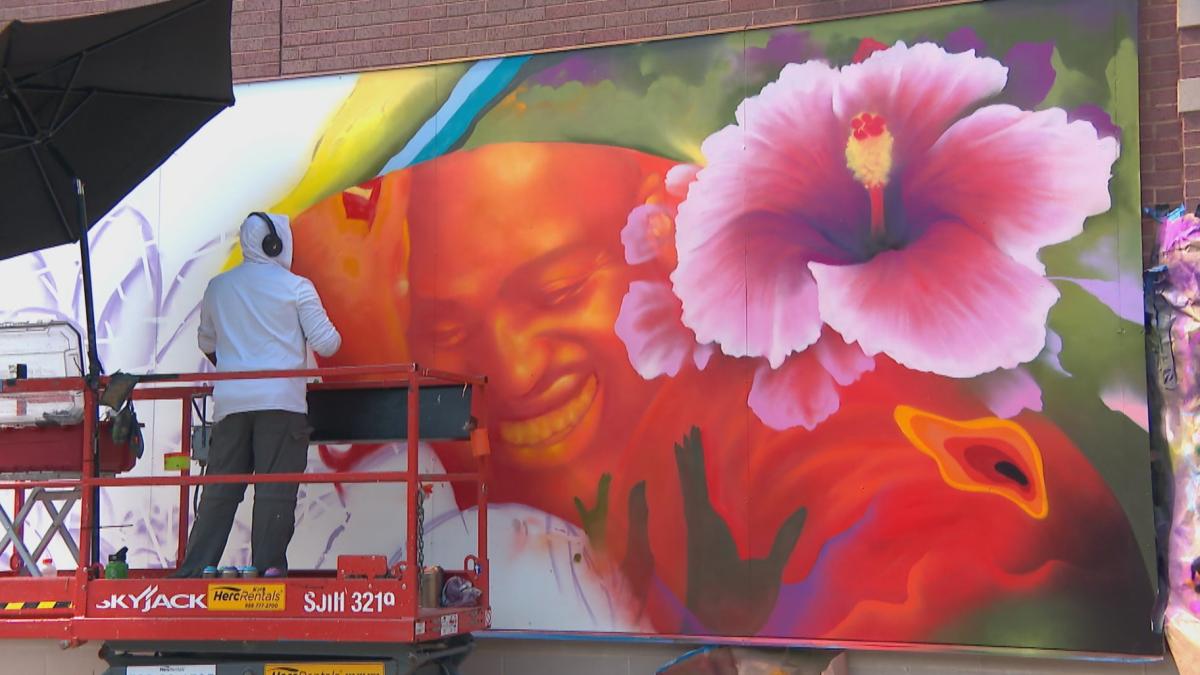 |
Max Sansing works on a mural paying homage to house music legend Frankie Knuckles. (WTTW News)
|
Chicago’s creative sector supports more than 210,000 jobs and is the city’s third largest industry, according to a new study commissioned by Arts Alliance Illinois.
“While Chicago’s creative economy generates extraordinary economic value, many artists and creative workers continue to face economic insecurity,” said Arts Alliance Illinois Executive Director Claire Rice during a press briefing. “The opportunity for change is clear to ensure that the people creating this value can share more fully in the prosperity that they helped generate.”
The study released Thursday found that the city’s creative sector generates $50 billion in economic output annually. The study defines output as the economic value produced by the sales of goods and services, such as concert tickets and broadcasting services.
The full study can be found here.
More context:
The study found the creative sector is the third largest industry in the city, larger than educational services, retail and manufacturing. Chicago’s creative economy generates $5.7 billion in tax revenue annually, including $3.8 billion in federal taxes and $1.9 billion that gets spread across state, county and local jurisdictions, the study finds.
Despite the economic impact, artists do not feel they’re getting their fair share, according to musician and Arts Alliance Illinois board member Sam Thousand. Conversations he has with other artists also revolve around social justice, mental health, affordable housing and concerns with artificial intelligence, he added.
“When we think of art and culture in and of itself, it’s a way of life; it’s really not a job, but we have to make a living doing what we do,” Sam Thousand said. “I’m very excited that we’re in this moment now where there’s some real and true data that can be used to help continue this fight forward, to build some true infrastructure, to bring artists from just surviving to thriving.”
The creative sector is comprised of artists, musicians, designers, architects, filmmakers, publishers, advertising professionals, cultural organizations, educators, creative entrepreneurs and more, according to a news release.
The study comes as arts organizations look to bounce back following federal funding cuts last year and ongoing funding uncertainty under the Trump administration.
|
|
|
|
|
|
|
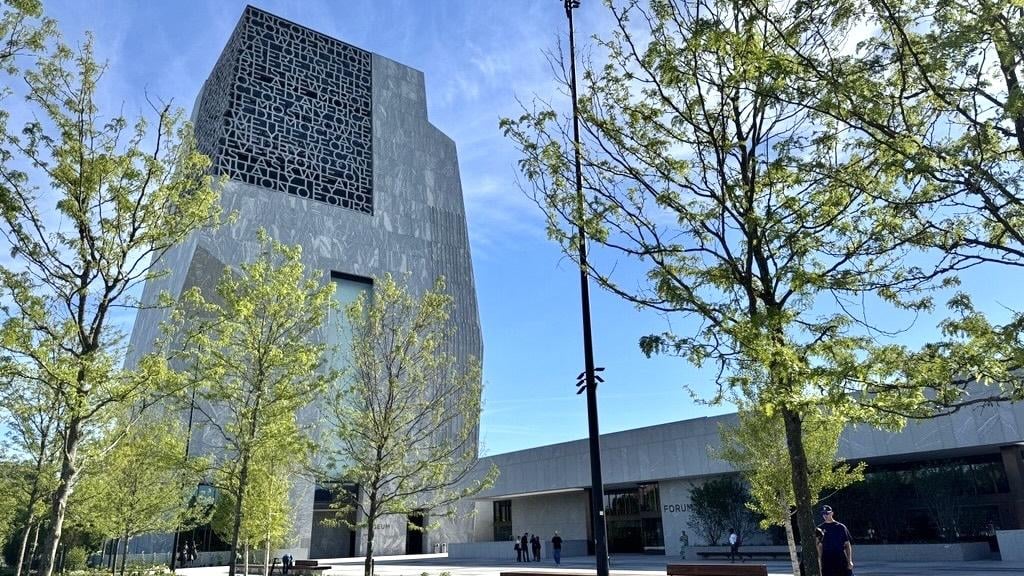 |
The Obama Presidential Center’s museum tower and plaza, June 3, 2026. (Nicole Cardos / WTTW News)
|
Those who’ve been unable to score tickets to the museum portion of the Obama Presidential Center so far will soon have another opportunity for entry.
Starting next week, the museum will release more tickets for visits from September through January, the museum announced Wednesday. Museum admission is currently sold out, according to its website.
Tickets will become available to the general public on July 8. Founding members of the Obama Foundation will receive presale access starting one week earlier on July 1.
“The overwhelming interest we’ve seen since opening our doors is a powerful reminder of how much people are looking for spaces that bring us closer together,” Obama Foundation CEO Valerie Jarrett said in a statement. “We’re thrilled to make more tickets available and grateful to our members whose support helps us invest in the next generation of changemakers.”
The museum requires a ticket, but the rest of the Obama Presidential Center campus is free and open to the public. The campus also includes a playground, a Chicago Public Library branch, gardens, walking trails and art installations.
The Obama Presidential Center opened to the public June 19.
|
|
|
|
|
|
More From WTTW News:
|
|
 |
|
|
|
Back in the Day: June 25, 2016 - Cubs All-Star Jim Hickman Dies at 79
|
Jim Hickman, a Major League Baseball outfielder and first baseman, joined the Chicago Cubs in 1968 in a trade with the Los Angeles Dodgers. He spent five full seasons on the North Side, which included a massive year in 1970 that found Hickman swinging a .315 batting average with 33 doubles, 32 home runs and 115 RBIs. At the end of the season, he finished eighth in MVP voting and was voted into the MLB All-Star Game in the middle of the season. It was at the All-Star Game that his walk-off single in the 12th inning drove in Pete Rose to win the game for the National League. After a short stint with the St. Louis Cardinals in 1974, Hickman retired and returned to his home of
Henning, Tennessee, where he had a farm and worked as a developmental hitting coach for the Cincinnati Reds organization. Ten years ago today, he died at 79 after a lengthy illness.
|
|
|
|
|
This Week’s Arts and Culture Events
|
Every Thursday, WTTW News newsletter producer Josh Terry highlights his picks for the week’s must-see cultural events.
It’s been a good summer in Chicago so far. Despite the above-average rainfall, the weather’s been splendid, the Chicago White Sox are sitting atop the American League Central Division, and the Bulls just drafted two prospects, Caleb Wilson and Dailyn Swain, who make local basketball fans hopeful for the future. Another reason for optimism? The wealth of culturally enriching arts events that happen across the city every day. Below is just a small sample of what’s on offer this weekend.
Art: “Voices Embodied: Prognostication” — Design Museum of Chicago
Questions of accessibility, inclusivity and a “disability-forward future” linger in a new exhibit at the Design Museum of Chicago. “Voices Embodied: Prognostication” boasts the work of 38 local, national and international artists, who were tasked with pushing “the boundaries of what a typical museum show looks like.” These works go on display Friday and will remain on view until January 2027. For more information, click here.
Music: “‘Star Wars: A New Hope’ in Concert” — Chicago Symphony Orchestra
The great thing about the symphony is that you can witness timeless works from composers who died more than 200 years ago or you can hear the score to an enduring sci-fi classic from the 1970s. The latter is on display this weekend at the Chicago Symphony Orchestra, where conductor Sarah Hicks leads the CSO through John Williams’ Oscar-winning score for “Star Wars: A New Hope.” Performances run Thursday through Saturday. Click here for tickets.
Film: “Filmspotting Fest II” — Athenaeum Center for Thought and Culture, Music Box Theatre
For more than 20 years, “Filmspotting” has been one of the most essential film podcasts and it’s based in Chicago. Hosted by Adam Kempenaar and Josh Larsen, the show will be hosting its second-ever film festival at the Athenaeum Center for Thought and Culture and the Music Box Theatre this weekend. Screenings include 2016's "Krisha," which features a Q&A with director Trey Edward Schultz, 2001's "Wet Hot American Summer," 2001’s "The Royal Tenenbaums" and more. For showtimes, tickets and festival passes, click here.
|
|
|
|
|
|
|
What's the best place for deep-dish pizza? Tell us why.
|
|
|
Email DailyChicagoan@wttw.com with your responses and your answers might be published.
|
|
|

|
|
5:30 PM | 10:00 PM
|
|
|
Want more WTTW News content? Follow WTTW on
Instagram to check in with us daily, go behind-the-scenes, and more.
|
Newsletter Producer: Josh Terry
|
|
|
|
|