Today’s Daily Chicagoan is brought to you, in part, by:
|

|
|
|
|
Happy Friday. Jump into your Labor Day weekend with the latest headlines from WTTW News.
|
|
|
|
|
 |
(Michael Izquierdo / WTTW News)
|
Mayor Brandon Johnson said Thursday Chicago faces a projected $882.4 million budget shortfall in the 2027 fiscal year, a smaller than expected gap during an election year.
That is more than 23% smaller than the $1.15 billion deficit that confronted city officials a year ago. Debate over how to fill that gap led to an intense confrontation between the mayor and a majority of the Chicago City Council, which approved a spending plan opposed by Johnson.
For more than a decade, Chicago’s financial woes have eased just months before the mayor and all 50 alderpeople faced the city’s voters, giving everyone just a bit more breathing room as they campaign for new four-year terms.
But Johnson told reporters the coming months will nevertheless be challenging.
“We have difficult and consequential decisions ahead of us as we work to address the structural financial challenges that have confronted Chicago for decades,” Johnson said.
Pressed by reporters, Johnson declined to rule out proposing a property tax hike to help close the deficit but said he would once again focus his efforts on raising what he calls “progressive” revenue to fill the city’s projected budget gap by taxing large firms and the city’s wealthiest residents.
More context:
The mayor, who must detail his proposal to close the projected gaps in the city’s 2027 budget by mid-October, also declined to rule out once again asking the City Council to levy a per-employee tax on large companies. That proposal was rejected by the City Council during last year’s tense budget debate.
Johnson announced earlier this month he will refinance a chunk of the city’s massive debt to fill a budget gap of $85.1 million in the 2026 budget after a plan opposed by Johnson to sell $1 billion in debt owed to the city by individuals failed to generate any revenue, much less the $89.6 million the spending plan relied on.
The city’s budget forecast for 2027 estimates that Johnson will declare approximately $340 million in property taxes earmarked to fight blight to be “surplus,” according to acting Budget Director Jonathan Ernst, who cautioned that projection could change.
The city’s 2027 budget is still structurally unbalanced, pinched by soaring pension costs, spiraling personnel costs and a massive amount of debt.
Johnson said he would not ask the City Council to borrow to cover the city’s annual operating costs in 2027, as it did in 2026.
|
|
|
|
|
Sponsor Message
|
|
Your next night out is at Paramount Theatre!
The hit Broadway musical Mean Girls is taking over downtown Aurora now through October 11th, in a bold, dazzling, larger-than-life style that only Paramount can deliver.
Based on the iconic Tina Fey movie, this show is filled with unforgettable pop-rock songs and big laughs – it’s perfect for anyone who’s ever tried to find their place in the crowd.
Don't miss the musical everyone will be talking about. Put on your pink and get your tickets now at ParamountAurora.com or call 630-896-6666.
|
|
|
|
|
 |
Invasive carp are voracious feeders that grow and multiply rapidly. (Invasive Carp Regional Coordinating Committee)
|
A work stoppage on the billion-dollar Brandon Road invasive carp barrier project has ended.
A spokesperson for Michigan Gov. Gretchen Whitmer told WTTW News the governor's office had received confirmation Wednesday night from the U.S. Army Corps of Engineers and the White House that the stop order was lifted.
Whitmer and President Donald Trump had spoken earlier on Wednesday, according to her office. During that conversation, the governor “underscored the urgency of the moment” surrounding the carp barrier,her office said.
The Army Corps had halted work on the Brandon Road Interbasin Project in late July, prompting widespread backlash from politicians and advocacy organizations across the Great Lakes. The Corps did not provide information on the reason for the stoppage.
Some backstory:
The Brandon Road project is considered the best chance of keeping invasive carp from entering Lake Michigan and the entire Great Lakes ecosystem. The fish have been steadily moving up the Mississippi River and its tributaries since they escaped captivity in the late 1970s.
Invasive carp refers to bighead, silver, black and grass species. These voracious feeders grow and multiply rapidly and outcompete native fish for resources. Should the carp enter the Great Lakes, experts fear the region's fishing, boating and recreational industries would collapse.
Alliance for the Great Lakes pegged the value of the Great Lakes fishery at $5.1 billion and recreational boating at $16 billion.
In mid-August, sampling crews from the Illinois Department of Natural Resources discovered juvenile invasive silver carp further up the Illinois River than ever before since monitoring began in 2010, creating the “sense of urgency” referenced by Whitmer.
The barrier had been under discussion for more than a decade, but was stalled due to disagreements over funding, among other obstacles. Illinois and Michigan ultimately agreed to share costs with the federal government and construction got underway in early 2025.
Project advocates said the work stoppage resulted in costly and unnecessary delays.
|
|
|
|
|
|
|
|
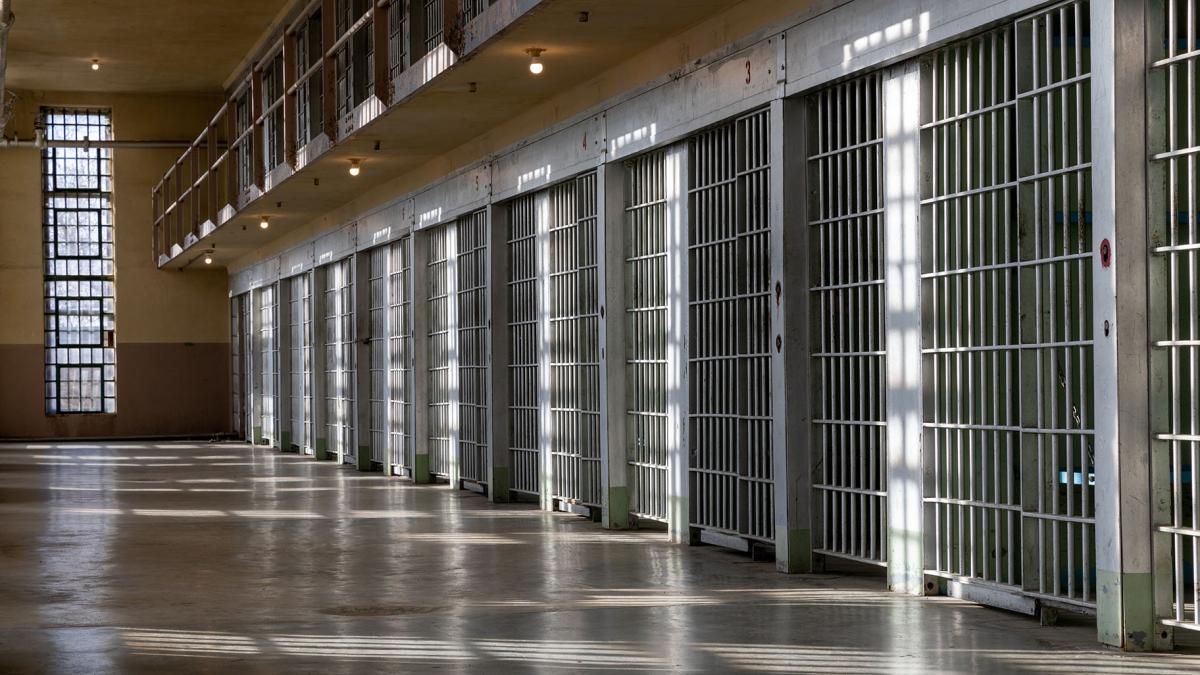 |
Prison cells are pictured in a file photo. (txking / iStock)
|
Thanksgiving, Christmas and New Year’s passed by for Daniel Valenzuela without calls to his family, according to a new federal lawsuit filed Wednesday.
Valenzuela is deaf and incarcerated at Danville Correctional Center in eastern Illinois. And over that 54-day period last holiday season, he alleges that the only accessible device for outside communication, a videophone, was not functioning.
According to Valenzuela, he and other incarcerated deaf people do not have equal access to the prison’s phone program compared to non-disabled people. The lawsuit was filed against Latoya Hughes, the director of the Illinois Department of Corrections.
The suit, filed by the law firms Disability Rights Advocates, Equip for Equality and Much Shelist, alleges that IDOC’s practices violated the Americans With Disabilities Act and the Rehabilitation Act. Valenzuela is seeking a court order requiring the department to provide telephone access equal to that provided to non-disabled people in custody.
“The ability to communicate with family is not a luxury — it is a lifeline,” said Steven Blonder, principal at Much Shelist, in a statement.
Some backstory:
As the department moved away from distributing paper mail in 2025, individual tablets were handed out to everyone in Illinois prisons. Individuals can place up to 15 telephone calls every day on those devices, from early morning to midnight, hypothetically without leaving their cell and without relying on IDOC staff.
But Valenzuela alleges that’s not true for him and other deaf people.
He communicates primarily using American Sign Language and uses videophones to place phone calls. The IDOC-issued tablets are equipped with videophone capability, but the lawsuit alleges that the department blocks that feature on the devices.
|
|
|
|
|
|
More From WTTW News:
|
|
|
 |
|
|
|
|
Back in the Day: September 4, 1986 - Prince Charles Visits Chicago
|
On this day 40 years ago, Prince Charles, then heir apparent to succeed his mother Queen Elizabeth II as the reigning monarch of England, visited Chicago. While it didn’t garner the press coverage and capture public interest the same way his wife Princess Diana’s visit would a decade later, Prince Charles’ trip was heavily reported on, and he was met by hundreds of spectators. Upon his arrival, he was greeted by Mayor Harold Washington, stopped at Marshall Field’s to buy gifts for his wife and sons, and later visited Whitney Young High School. “I was made an honorary citizen of Chicago in 1977, so I feel I have a great interest in what happens in this great city,” he
said at the time. Prince Charles, who is now King Charles III, has yet to return to the city.
|
|
|
|
|
|
|
What's one Chicago business you miss dearly? Tell us why.
|
|
|
Email DailyChicagoan@wttw.com with your responses and your answers might be published. Here's what you had to say:
“Wax Trax Records on Lincoln…It was THE spot for punk, new wave, independent, reggae and imported vinyl and clothing!” — Mark S.
“The Como Inn, The Golden Ox, Marshall Field's, The Blackhawk Restaurant, Club El Bianco, classic restaurants... So many wonderful dinners & special events at these places. They may be gone, but the memories remain.” — Michelle S.N.
“Either Toast or My Pi—depending on what time of day it is, I guess.” — @meredithshiner.com
“My heart aches every time I see the Marshall Field’s clocks on State Street. Oh, that store! I spent so many wonderful hours shopping and dining near the Christmas tree on the seventh floor. I shopped with my Mother and siblings every Christmas time. As a child, I had fun examining and playing with the toys on the fourth floor. As a mother myself, I took my children there every Christmas time and replicated those sweet memories.” — Email
|
|
|

|
|
5:30 PM | 7:00 PM
|
|
|
Want more WTTW News content? Follow WTTW on
Instagram to check in with us daily, go behind-the-scenes, and more.
|
Newsletter Producer: Josh Terry
|
|
|
|
|