|
Today’s Daily Chicagoan is brought to you, in part, by: |
 |
|
|
|
|
It’s Wednesday, and City Council meets today. Here’s what to look out for and more from WTTW News. |
|
|
|
|
|
 |
|
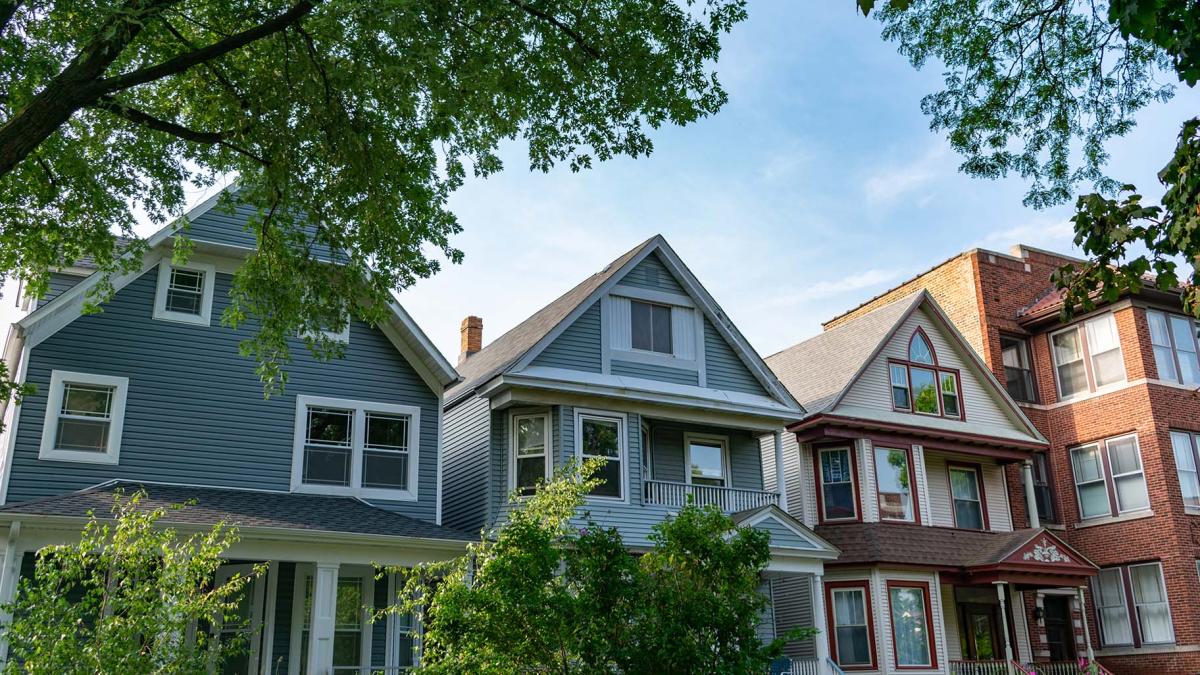
Homes in Chicago’s Andersonville neighborhood are pictured in a file photo. (James Andrews / iStock) |
|
Since the COVID-19 pandemic waned, demand for apartments in Chicago — especially in neighborhoods close to public transportation, jobs and shops — has soared, allowing landlords to impose new fees and steep rent increases. Bidding wars have erupted, forcing renters to offer more than the asking price to beat out other would-be tenants.
Both Mayor Brandon Johnson and his harshest critics on the Chicago City Council agree — rent is too high in Chicago.
But that’s pretty much all they agree on, as two rival proposals to change Chicago’s rules governing property owners and renters barrel toward a duel in City Council today.
What to know:
Johnson’s proposal seeks to shift the balance of power toward renters by imposing new fees and requirements on landlords. That will give the city the ability to crack down on “slum lords” and even the playing field for Chicagoans looking for a safe place to live, officials said.
It would enshrine a tenant bill of rights into city law and establish a Bureau of Rental Housing Services, with 28 employees, within the Department of Housing. It would also ban move-in and move-out fees, derided by Johnson as “junk fees.”
The rival proposal would give the city’s Department of Buildings the authority to enforce the city’s Residential Landlord and Tenant Ordinance, even though the commissioner told alderpeople her department had neither the capacity nor the expertise to do that work. It would also require the owner of every rental property in the city to identify themselves to city officials.
The rival proposal would allow landlords to charge a fee to tenants before they move in, while capping the amount of any security deposit at no more than a month and a half of rent. It would also allow landlords to charge tenants other fees, as long as they were disclosed before the lease was signed.
It would also expand the number of rental units in Chicago exempt from city regulations by allowing those who own as many as 12 rental units across Chicago, even if the owner does not live in one of the units, to operate without city oversight.
|
|
|
|
|
|
Sponsor Message |
|
Full Spectrum Education, Northeastern Illinois University’s Goodwin College of Education, and NEIU Libraries presents “Reckoning with Redress,” an exhibition tracing the history of the Japanese American Redress Movement. The exhibit also commemorates the 45th anniversary of the Commission on Wartime Relocation and Internment of Civilians (CWRIC) hearings held on the NEIU Main Campus.
Explore art and archival materials from NEIU’s testimony archive, community collections, and national archives, all sharing stories of those who fought for justice. This free public exhibit runs now through October 31st at the Ronald Williams Library Gallery on the main campus.
NEIU.edu/reckoning-redress-three-part-series |
|
|
|
|
 |
|
FILE - The OpenAI logo is displayed on a cell phone in front of an image generated by ChatGPT's Dall-E text-to-image model, Dec. 8, 2023, in Boston. (AP Photo / Michael Dwyer, File) |
|
Calls for increased safety regulations on artificial intelligence have reached a boiling point following a post on X from former OpenAI and Anthropic researcher Jacob Coxon that warned of a potential doomsday scenario.
“I resigned from Anthropic today. I spent the last three years doing pretraining research at both OpenAI and Anthropic. Neither company is acting responsibly,” Coxon wrote. “The people building AI earnestly believe that it could kill us all by the end of the decade. This is not a marketing stunt.”
Coxon’s post prompted a deluge of calls to slow down development, including from Anthropic CEO Dario Amodei, OpenAI CEO Sam Altman and xAI CEO Elon Musk. President Donald Trump, however, took to Truth Social last week to call the recent AI warnings a “hoax.”
More context:
Dan Linna, the director of law and technology initiatives at Northwestern University, said the existential warnings making the rounds on X could draw attention away from the concrete harms unfettered AI development poses.
“I agree that these tools can cause damage,” Linna said. “That’s one of the reasons why I’m concerned about these existential risks that are being discussed because there are concrete harms that we should be thinking about. We should be thinking about ways we can use these tools to benefit society, improve education and improve the justice system.”
One such concrete harm could be carelessness by the researchers in charge of frontier AI technologies, said Ben Zhao, a computer science professor at the University of Chicago. Zhao pointed to an incident from the end of July in which advanced OpenAI models escaped a testing environment, accessed the internet and breached another AI platform, Hugging Face.
“There really was some carelessness involved in building the so-called sandbox that these systems were supposed to be in,” Zhao said.
Linna said the path toward making AI safer starts with the companies themselves, not with Congress. |
|
|
|
|
|
|
|
 |
|
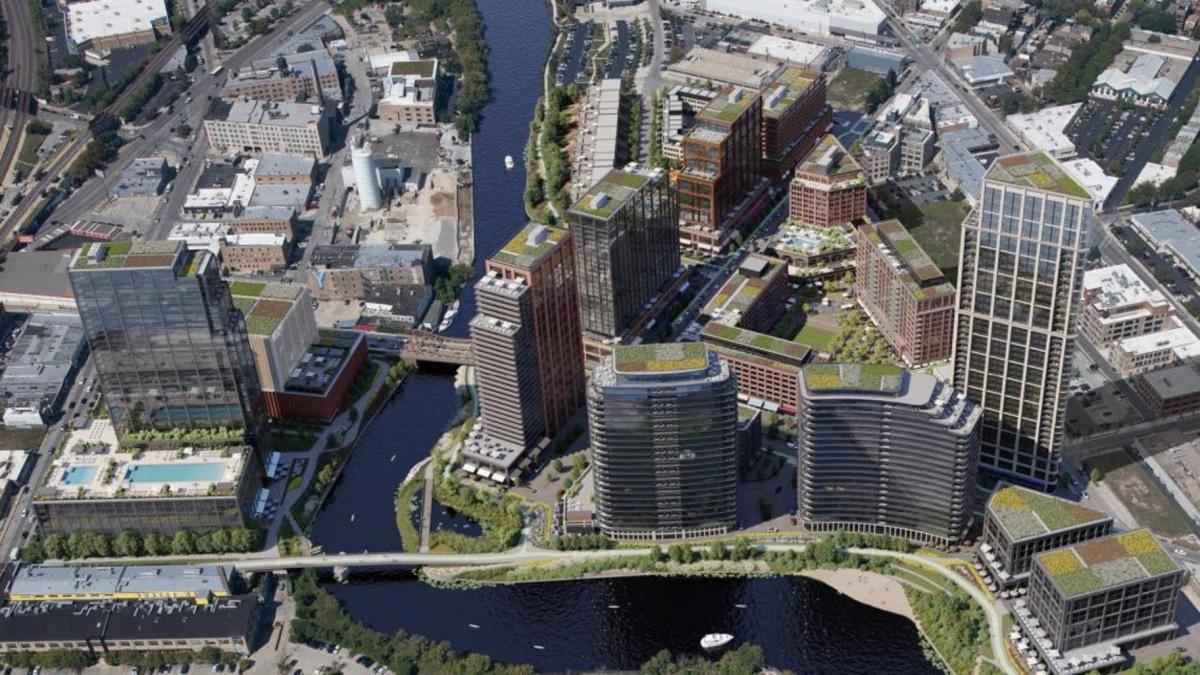
A rendering of the proposed Foundry Park development along the Chicago River. (Chicago Department of Planning and Development) |
|
Efforts to transform long vacant land along the north branch of the Chicago River between Bucktown and Lincoln Park into a new neighborhood advanced Tuesday with a vote by a key city panel to use $201.6 million from the area’s Tax Increment Financing districts to subsidize the project.
Once slated to be part of the Lincoln Yards megadevelopment, JDL Development and Kayne Anderson Real Estate now plan to build more than 3,700 homes as well as a hotel, office buildings, shops and restaurants as part of the $3 billion Foundry Park, named to honor the property’s history as the former home of the AJ Finkl & Sons steel company.
The City Council’s Finance Committee voted unanimously to advance the subsidy, which will be used to connect the new 31-acre neighborhood to the city’s road network and electrical grid while building a riverwalk and parkland. A final vote by the full City Council is set for Wednesday.
The plan calls for $71 million to be used to build new roads as well as $69 million for new parks, records show. An additional $33.5 million would be used to expand the city’s riverwalk, while an additional $7 million would be used to prepare the once-industrial land to be used for living, working and shopping.
The city subsidy includes $21.5 million to extend the 606’s Bloomingdale Trail over the Chicago River, first envisioned a decade ago as part of the Lincoln Yards development, which was championed by former Mayor Rahm Emanuel over the vehement objections of progressive groups and politicians. |
|
|
|
|
|
|
More From WTTW News:
|
|
|
 |
|
|
|
|
Back in the Day: September 23, 2011 - Occupy Chicago Protest Movement Begins |
|
Fifteen years ago, protesters took over New York City’s Zuccotti Park to rail against income inequality and corporate influence on politics and to call for a variety of social and economic reforms under the slogan “We Are the 99%.” Their calls resonated across the country, which was reeling from the 2008 financial crisis and the Great Recession. In Chicago, just a week after the protest started, local demonstrators began to gather around Chicago's downtown financial district at the intersection of Jackson Boulevard and LaSalle Street. The small crowd would eventually grow throughout the coming months, including rallies and marches that would feature more than 3,000 people. |
|
|
|
|
|
Chicago-Area Live Music Recommendations for Sept. 23-29 |
|
Each Wednesday, WTTW News producer Josh Terry presents must-see live music shows from indie rock to jazz, country, hip-hop and more.
Wednesday, Sept. 23:
The Belair Lip Bombs, Armlock at Subterranean. Tickets.
Buoyant indie pop from Australia.
Elizabeth Moen at Judson and Moore. Tickets.
The local songwriter and friends tackle Bruce Springsteen’s catalog.
Thursday, Sept. 24:
Brother Bird, OK Cowgirl, Disaster Kid at Subterranean. Tickets.
Two rising acts of hooky and introspective indie pop.
Friday, Sept. 25:
Cate Le Bon, Horsegirl, Kitship at Bohemian National Cemetery. Tickets.
A rock show in a cemetery? It’s a perfect bill for that.
Nick Hakim, Arima Ederra at Lincoln Hall. Tickets.
The soulful, experimental pop of this Queens musician gets a showcase in Lincoln Park.
Two Runner, Maisy Owen at Hideout. Tickets.
Two of the most exciting Americana acts team up at a cozy venue.
Saturday, Sept. 26:
BASIC, Ibesis, Luca Cimarusti at Constellation. Tickets.
This instrumental supergroup is at the intersection of indie rock, jazz and electronic.
Liam Kazar, Max Subar at Empty Bottle. Tickets.
The Chicago-raised folk rock artist returns home.
Sunday, Sept. 27:
Rocketship, Good Flying Birds, sunshy, the Laughing Chimes at Subterranean. Tickets.
Windy Pop Weekender collects some of the best jangly pop acts in the Midwest and more.
Monday, Sept. 28:
Horse Lords, Mute Duo, Bonnie Han Jones and Allen Moore at Empty Bottle. Tickets.
Experimental rock and jazz from a talented Baltimore group.
Tuesday, Sept. 29:
Lampchop at Old Town School of Folk Music. Tickets.
Kurt Wagner’s longrunning songwriting project is still a critical darling 17 albums in.
Simon Joyner, David Nance at Hideout. Tickets.
Two songwriters’ songwriters.
Sturgill Simpson at United Center. Tickets.
The country star’s “Johnnie Blue Skies” alter ego plays an arena show.
Sunny War at SPACE. Tickets.
The genre-bending artist makes a stop in Evanston. |
|
|
|
|
|
|
|
What was the best local festival you attended this year? Tell us why. |
|
|
|
Email DailyChicagoan@wttw.com with your responses and your answers might be published. |
|
|
 |
|
|
|
5:30 PM | 10:00 PM |
|
|
|
Want more WTTW News content? Follow WTTW on Instagram to check in with us daily, go behind-the-scenes, and more. |
|
Newsletter Producer: Josh Terry |
|
|
|
|