Today’s Daily Chicagoan is brought to you, in part, by:
|

|
|
|
|
|
|
|
 |
(Cristian Lourenço / iStock)
|
Last week Chicago saw its first so-called teen takeover of the year. Hundreds of young people gathered in the Loop on packed sidewalks and streets, resulting in eight arrests, 24 curfew violations and renewed calls for a stricter curfew ordinance.
Mayor Brandon Johnson last year vetoed a measure that would have allowed police to impose a snap curfew earlier than 10 p.m. in an effort to curb large crowds of young people from gathering.
The Rev. Sandie Norman, community organizer and founder of the outreach group Life Beyond Limits, was present at the scene, which she described as chaotic.
“I spoke to quite a few teens,” Norman said. “I even took teens home to assist with helping them to stay out of trouble and trying to get them out of the environment. Most of the teens said that they were there to have a good time to meet up because it was spring break.”
Ald. Brian Hopkins (2nd Ward) is once again calling for snap curfew powers for police.
“The situation was out of control about an hour ago,” he wrote on social media Wednesday, referring to the takeover. “But then at 10:00pm, an order was issued for curfew enforcement. It had an immediate impact on this violent teen trend. Curfew enforcement is effective.”
More context:
The Chicago City Council passed a revised ordinance last year that would allow police to impose a curfew earlier than 10 p.m. when large, disruptive events take place. Johnson vetoed the measure, at the time saying “the easy thing to do would be to tell people that, if we threaten young people and families with severe repercussions, that somehow would make us safer. But we know from years of doing the same old tired forms of policy that it doesn’t get the results that people have longed for. It doesn’t keep us safe and it doesn’t make our city stronger.”
Meyiya Coleman, coordinator for Voices of Youth in Chicago Education at Communities United, often hears from the young people she works with that the youth mental health crisis is the root problem for poor behavior from teens.
“(The youth) they’re saying, ‘Hey, we’re not going into these communities trying to be violent. We’re going into these communities because ours isn’t safe.’ Gun violence is happening, gang violence is happening,” Coleman said. “A curfew doesn’t stop a bullet.”
|
|
|
|
|
|
Sponsor Message
|
|
Make your plans to celebrate this April with the Poetry Foundation, offering a full roster of FREE public programs, including:
- a poetry reading with Chicago’s own National Book Award winner Patricia Smith;
- a live performance by chamber music collective D+Composed;
- a library packed with more than 40,000 books of poetry for readers of all ages.
Visiting Hours: Wednesday, Friday, Saturday 11 AM–5 PM; Thursday 11 AM–6 PM
|
|
|
|
|
|
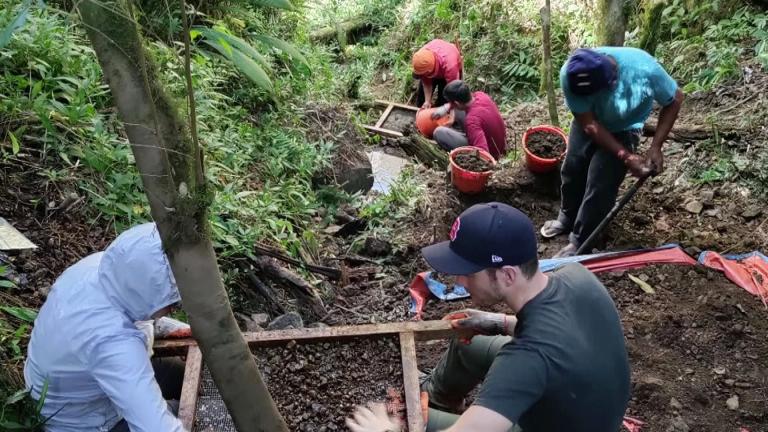 |
Rick Elliott is part of a team working to locate and bring home the remains of U.S. service members. (Provided)
|
Inside the Department of Behavioral Sciences at the University of Illinois Chicago, a dedicated team of researchers is working to solve decades-old mysteries by locating and identifying the remains of missing American service members who never made it home from war.
Rick Elliott and Jessica Bishop work at the university’s Center for the Recovery and Identification of the Missing (CRIM). The center partners with the Defense POW/MIA Accounting Agency (DPAA), a federal agency that recovers U.S. service members who were killed in past conflicts and are still unaccounted for.
“We get to participate in this mission to bring service members home and help families,” Bishop said.
The DPAA brings together teams of historians, archaeologists and forensic scientists to search for soldiers from conflicts such as World War II and the Vietnam War. CRIM researchers have searched for WWII soldiers in the Philippines and supported missions in Vietnam and Italy.
“First we’ll do the historical research to figure out what happened in each case to see if we can find the location, you know, where the aircraft might have crashed,” Elliott said.
So far, Elliott has been on six missions and is preparing for his seventh trip, this one to the Philippines. Teams use advanced detection devices and forensic technology to locate remains in remote and rugged terrain.
Last year, CRIM researchers made a major breakthrough along a mountainside in Laos bordering Vietnam, locating five American service members.
Their families speak:
Steve Hall's father was among 19 men involved in a classified mission known as Lima Site 85, a secret U.S. operation that placed a tactical air navigation radar system atop a remote mountain in Laos during the Vietnam War. For Hall, the discovery of his father’s remains ended nearly six decades of uncertainty.
“We did so many things together, so not only did I lose probably my best friend, but I lost my father,” Hall said. He added that he’s very thankful for the DPAA and hopes other families can have the same sense of closure.
|
|
|
|
|
|
|
|
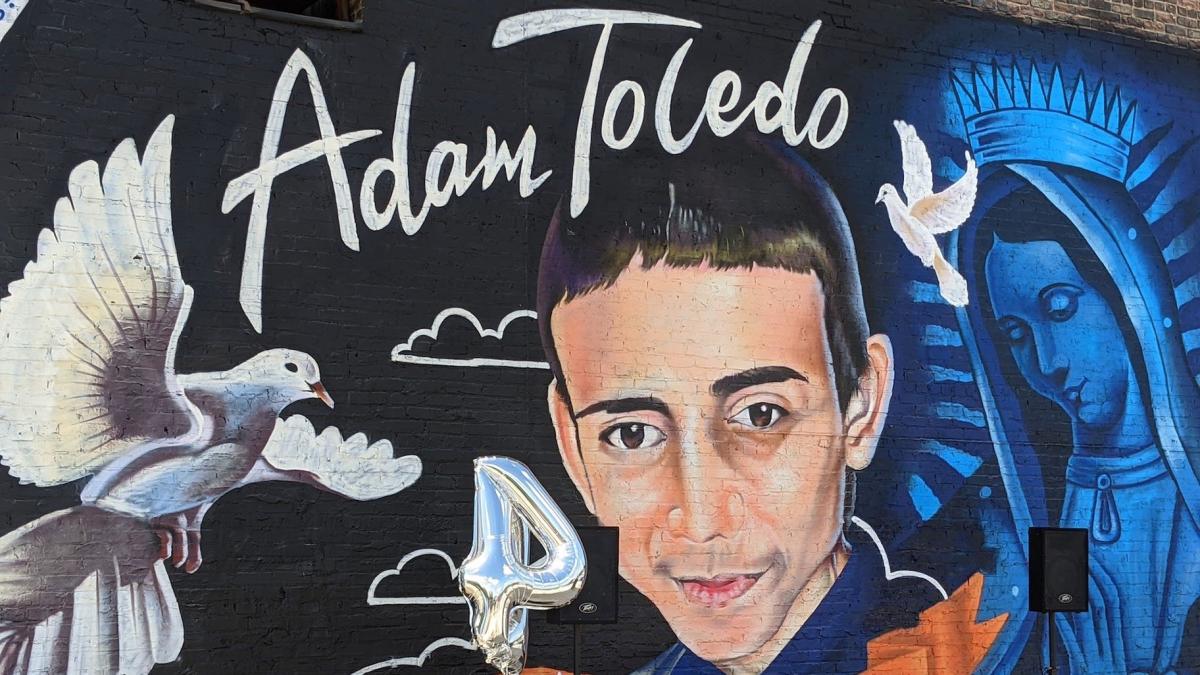 |
A mural of Adam Toledo painted by Milton Coronado. (Matt Masterson / WTTW News)
|
A Cook County jury is set to decide whether the Chicago Police Department is liable for the death of Adam Toledo, the 13-year-old who was shot and killed by an officer after a brief foot chase in March 2021, records show.
The trial is set to start April 6, just days after the fifth anniversary of Adam’s death, which spurred outrage-fueled demonstrations and renewed calls for police reform.
Representatives of the city’s Department of Law declined to comment on the upcoming trial, which could be averted if officials negotiate a last-minute settlement in the high-profile case, preventing a trial that could lead to a multimillion-dollar jury verdict.
Some backstory:
The fifth anniversary of Adam’s death is a “solemn moment for his family, who continue to carry the unimaginable weight of his loss every single day,” said Adeena Weiss, the lead lawyer for Elizabeth and Marco Toledo, his parents.
While declining to discuss the specific evidence they intend to present to a jury, Weiss said the Chicago Police Department was responsible for the “avoidable intentional death of a child.”
The lawsuit was originally scheduled to go to trial in November 2024, but has been delayed repeatedly.
|
|
|
|
|
|
More From WTTW News:
|
|
 |
|
|
|
Back in the Day: March 31, 2018 - Loyola Chicago’s Miracle Final Four Run Ends
|
Last-minute buzzer beaters. An improbable “Cinderella story” run to the final rounds of the tournament. A 98-year-old nun who is also the team’s biggest supporter. Loyola Chicago’s 2018 season had everything. The Ramblers entered the NCAA March Madness college basketball tournament as the 11th seed, and went on to defeat #6 Miami, #3 Tennessee, #7 Nevada and #9 Kansas State to make it to the Final Four. On this day eight years ago, Loyola Chicago faced the #3-ranked Michigan Wolverines, where the Ramblers fell 57-69 in a heartbreaking loss. The Wolverines would go on to lose to the eventual champions, #1-ranked Villanova Wildcats.
|
|
|
|
|
This Week’s Staff Recommendations
|
Every Tuesday, WTTW News staffers highlight their favorite things in Chicago. This week, it’s politics reporter Heather Cherone’s guide to Park Ridge.
Heather Cherone: Tucked on the city’s northwest shoulder, Park Ridge isn’t part of Chicago by a quirk of fate: In 1910, it decided to become its own city — even as its neighbor Edison Park jumped at the chance to join Chicago proper.
Here’s a look at what makes Park Ridge unique — besides the fact that I’ve called it home for more than a decade.
An Actual Ridge: While Chicago is famously flat, Park Ridge’s forever name is appropriate. A glacial moraine runs through the town, approximately 700 feet above sea level. That rich soil, perfect for making bricks, helped draw new residents to the area all the way back in the 1830s.
Think Outside the City: After Park Ridge became its very own city, city leaders focused on setting it apart from Chicago by advertising it as a respite from the grind of city living. Park Ridge was “A Restoring Place of Health & Vigor” and “The Recreation Place of the Tired & Worn Out,” according to its very first marketing campaign.
Soon Park Ridge was home to a colony of artisans, sculptors, printers and musicians, including Clara Barck Welles of the Kalo Shop, Albert and Dulah Evans Krehbiel of the Ridge Crafts, and Alfonso Iannelli of Iannelli Studios.
Let’s Go to the Show: Park Ridge’s most famous landmark is the Pickwick Theatre, an art deco building designed by Iannelli for the city he loved that has (so far) survived more than a few brushes with closures. A masterpiece with a spot on the National Register of Historic Places, the theater became nationally famous in the 1980s when it played a key role in the opening credits of "At the Movies" with Siskel & Ebert, which showed the two famously combative critics at the ticket booth, at the concession stand and sneaking
into a closed balcony for that night’s feature presentation.
|
|
|
|
|
|
|
What's your favorite building in Chicago? Tell us why.
|
|
|
Email DailyChicagoan@wttw.com with your responses and your answers might be published.
|
|
|
|

|
|
5:30 PM | 10:00 PM
|
|
|
|
Want more WTTW News content? Follow WTTW on Instagram to check in with us daily, go behind-the-scenes, and more.
|
Newsletter Producer: Josh Terry
|
|
|
|
|