Good morning, Chicago. Start your week on the right foot with these stories from WTTW News.
|
|
|
|
|
|
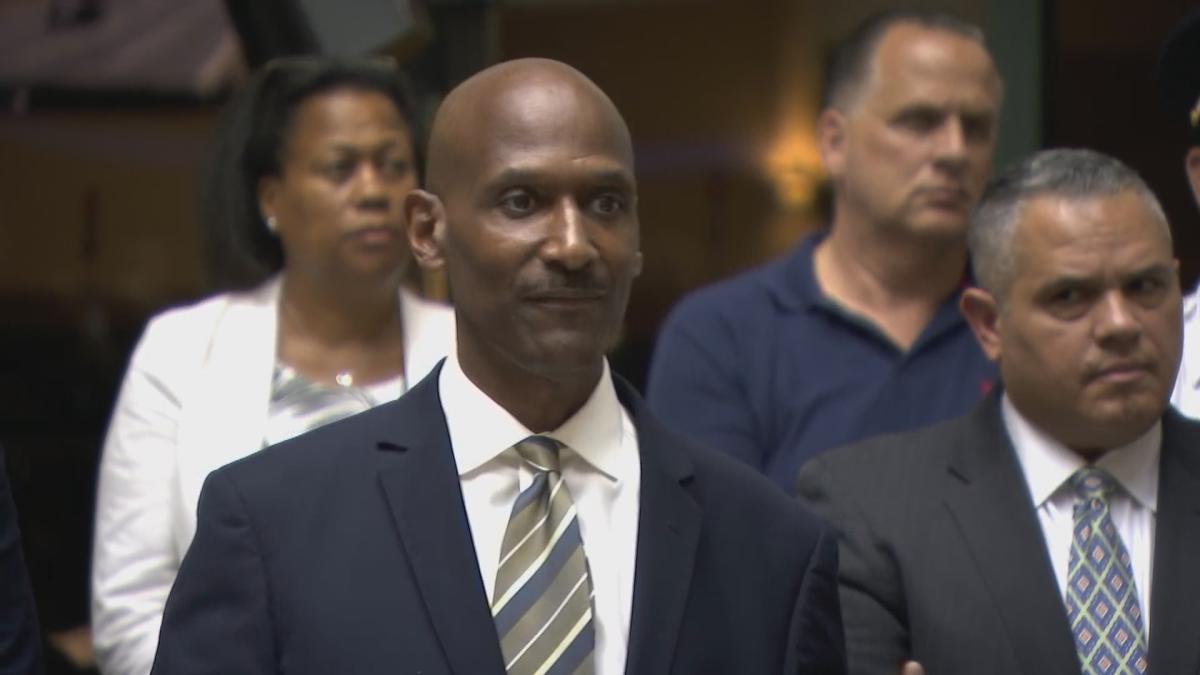 |
Interim Chicago Police Superintendent Fred Waller speaks during a July 5, 2023, news conference. (WTTW News)
|
Newly installed interim Chicago Police Supt. Fred Waller is collecting an annual city taxpayer-funded pension of $141,608 while he has been earning more than $210,648 per year as a deputy director, bringing his total annual compensation to $352,256, according to records obtained by WTTW News.
Waller, 64, has now twice served as CPD’s interim leader, first leading the department from May 2023 to September 2023 before Mayor Brandon Johnson picked Larry Snelling as the city’s top cop. After Snelling took office, Waller stayed on to advise Snelling, serving as deputy director in the superintendent’s office.
Waller has received pension payments of more than $11,500 per month since he retired on Aug. 15, 2020, and they will continue for the rest of his life, according to records obtained by WTTW News from the Policemen’s Annuity and Benefit Fund of Chicago. Annually, Waller’s pension increases by 3% to cover any increase in the cost of living, records show. He received a pension payment in June, according to documents obtained by WTTW News through a Freedom of Information Act request.
It is not yet clear whether Waller will get a pay bump to serve as interim superintendent. Waller and CPD representatives did not respond to a detailed list of questions from WTTW News, including whether it is appropriate for Waller to earn both a taxpayer-funded pension and a government salary at a time when the city is facing a projected budget shortfall of $1.16 billion in 2027.
By comparison, Mayor Brandon Johnson earns $221,052. The city’s highest paid employee is Michael McMurray, the commissioner of the Department of Aviation, who earns $350,000 a year.
CPD spent $162.5 million more than its City Council-approved budget in 2025.
Some backstory:
Since 2023, Waller’s salary as CPD deputy director has risen approximately 16%.
Waller is expected to serve as CPD’s interim superintendent through the end of the year, as the Community Commission for Public Safety and Accountability searches for a permanent leader. The oversight board has until Nov. 15 to recommend three finalists to Johnson, who then gets 30 days to choose one or reject all three, which would force the commission to start over. Johnson’s pick must be confirmed by the City Council.
It is legal in Illinois to simultaneously earn a salary from a government agency and collect a taxpayer-funded pension. Waller is not the first public official to take on a new taxpayer-paid job after retiring from another government position.
In 2017, then-Gov. Bruce Rauner signed a law preventing police officers who retire, begin collecting their pension and are rehired from earning a second pension.
|
|
|
|
|
|
|
 |
A scene from “Amerigo: The Search for the American Dream.” (Provided)
|
For centuries, millions of people have traveled to the United States in pursuit of one thing: the American Dream.
But as the country faces unprecedented affordability crises, rising mental and physical health issues, and a polarizing political climate, a new documentary seeks to discover whether that dream can be realized.
“Amerigo: The Search for the American Dream” asks everyday people and experts how they define the American Dream and how it has changed since the country’s beginnings.
David McCourt, Emmy Award-winning producer, writer and narrator of “Amerigo,” traveled across all 50 states over two years and interviewed 1,000 people to find out whether the pursuit of the American Dream still has the power to unite the nation.
“Everybody was celebrating America’s 250th birthday and they seemed to be looking backwards. We wanted to create a film that looked forward,” David McCourt said. “The film is America’s point of view on what we need going forward.”
The documentary begins with Americans describing their version of the American Dream. For many, a white picket fence and a big house were included. Now, with rising housing costs, mass layoffs and an ongoing affordability crisis throughout the United States, David McCourt said that’s not as attainable as it once was.
“It’s hard to live a dignified life if you know you can never afford to own a tiny piece of America, the country that you love, the country that you’re willing to work for, the country that you’re willing to fight for, the country you’re willing to contribute to your community for, and volunteer for and help strangers for, but you can’t own a tiny piece of it yourself,” David McCourt said. “I don’t think that’s a good policy.”
“The hope there is that we will start talking to one another, that we will build community, that we will start being allies instead of rejecting one another,” Julie McCourt, co-producer of the film, said. “I think that’s a real hope for the future.”
“Amerigo: The Search for the American Dream” airs at 9 p.m. Monday on WTTW; it can also be streamed at pbs.org.
|
|
|
|
|
|
|
|
|
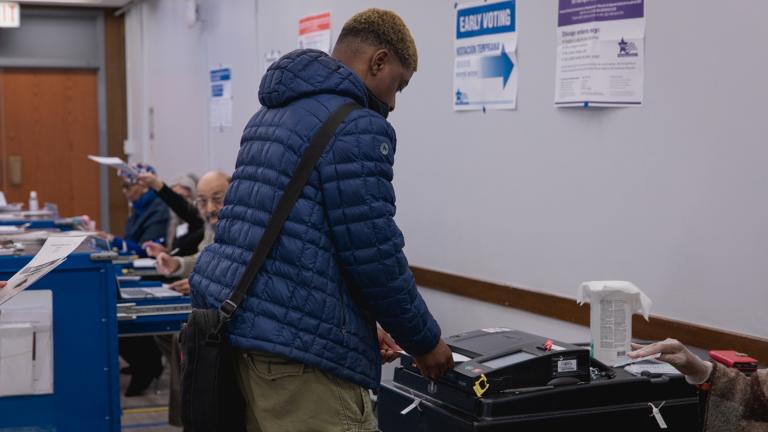
A student at the University of Illinois Chicago casts a ballot for the April 4, 2023, Chicago runoff election at the UIC Student Center polling location. (Michael Izquierdo / WTTW News)
|
President Donald Trump has renewed his claims about threats to electoral security and integrity as the 2026 midterm elections approach.
In a recent speech, Trump discussed foreign interference, noncitizen voting and vulnerabilities in the American election system — reiterating some widely disproven charges. The administration released a trove of heavily redacted documents. One claim was that U.S. elections have been compromised for years and government officials plotted to bury the evidence. The documents do not corroborate that assertion.
For the last decade, Trump has been advocating for greater distrust in American voting infrastructure, particularly following his loss to former President Joe Biden in 2020, calling the outcome “rigged” and pushing the lie that undocumented or noncitizen residents were voting en masse.
That narrative was further pushed when Trump and the U.S. Department of Homeland Security penned letters to four states’ secretaries of state claiming that an internal DHS review found 278,000 noncitizens registered to vote in Pennsylvania, New Jersey, California and Nevada collectively.
“There’s no foundation to it,” Stephen Maynard Caliendo, professor of political science at North Central College, said of widespread voter fraud claims. “Up to 250,000 voters could be one voter, and it’s a federal crime to register to vote or to try to cast a vote if you’re not a U.S. citizen, if you’re not eligible to vote. It’s very rare. It doesn’t happen very often.”
More context:
There are still real, significant vulnerabilities in American election infrastructure despite incremental improvements since 2016. Technology is always vulnerable to hacking, and voting machines are often cheaply made, according to Jacob Braun, executive director of the Cyber Policy Initiative at the University of Chicago. Voting machines are built to count votes but not designed to fend off international hacking.
|
|
|
|
|
|
More From WTTW News:
|
|
|
 |
|
|
|
Back in the Day: July 27, 1970 - Sears, Roebuck & Co. Announce Plans For World’s Tallest Building
|
On this day 56 years ago, Sears, Roebuck & Co. announced the construction of a new central headquarters in downtown Chicago to house its business and executive leadership. The plans stated that it would also be the world’s tallest building; the 110‐story Sears Tower would be 1,450 feet tall, surpassing New York City’s Empire State Building and World Trade Center. It was designed by the Chicago architectural firm Skidmore, Owings & Merrill, and ground broke on the project in August 1970. The Sears Tower opened in 1973 and cost more than $150 million. One of the most iconic buildings on the Chicago skyline and worldwide, it held the title of tallest building until 1996, and
was renamed the Willis Tower in 2009.
|
|
|
|
|
This Week’s Civic Events and Meetings
|
Every Monday, WTTW News highlights the best ways to get involved with local government.
City Council’s Committee on Health and Human Relations
On Tuesday at 10 a.m., the City Council’s Committee on Health and Human Relations will hold a regular meeting. Solicitations for public comment will be open until Monday at 1 p.m. For more information, check the city clerk website.
Chicago Board of Education
On Thursday at 10:30 a.m., Chicago’s Board of Education will hold a regular meeting. This year’s budget cycle has been particularly contentious, and closing a $732 million budget gap is the biggest priority for the board members. Chicago Public Schools is expecting hundreds of layoffs, but the Chicago Teachers Union is firmly against those cuts. Though the CBOE has until Aug. 29 to approve a budget, the pressure is rising to reach a deal. For more info, click here.
|
|
|
|
|
|
|
What’s the most underrated neighborhood in Chicago?
|
|
|
Email DailyChicagoan@wttw.com with your responses and your answers might be published.
|
|
|

|
|
5:30 PM | 10:00 PM
|
|
|
Want more WTTW News content? Follow WTTW on
Instagram to check in with us daily, go behind-the-scenes, and more.
|
Newsletter Producer: Josh Terry
|
|
|
|
|