Today’s Daily Chicagoan is brought to you, in part, by:
|

|
|
|
|
It’s Monday. Enter a new week with these stories from WTTW News.
|
|
|
|
|
|
 |
(WTTW News)
|
Chicago Police Department officers made 267,240 undocumented traffic stops in 2025, an increase of nearly 27% as compared with the number of traffic stops officers made in 2024 but did not properly document for state officials, according to records obtained by WTTW News.
That means officers made an average of 732 traffic stops every day in 2025 that were not documented as required by CPD policy and state law, according to data from the city’s Office of Emergency Management and Communications obtained through a Freedom of Information Act request.
It has been seven months since a high-ranking CPD official told members of the Chicago City Council that police leaders were working to “fix” what he called “a discrepancy” that led to 210,622 undocumented traffic stops in 2024.
For this analysis, WTTW News compared the number of traffic stops documented by CPD officers in 2025 with what is officially known as a TSS form (and informally referred to as a “blue card”) with the total number of traffic stops recorded by dispatchers working for OEMC.
CPD officers documented 224,846 traffic stops in 2025, according to CPD data obtained through a Freedom of Information Act request. That represents a drop of 24% from 2025, according to CPD data.
Chicago Police Supt. Larry Snelling has vowed to focus on dangerous drivers and criminal activity while reducing the overall number of traffic stops.
Between 2023 and 2025, the number of documented traffic stops by CPD officers has fallen more than 58%, according to CPD data. During the same period, homicides fell nearly 33% and shootings fell more than 37%, according to city data.
Some backstory:
CPD’s traffic stop policy, last revised seven years ago, requires officers to document every time they stop a driver, regardless of the reason, by not only notifying dispatchers but also filling out a form that is better known as a “blue card.”
That paper card, filled out by hand, requires officers to document the reason for the stop, the driver’s name, address, gender, year of birth and “the officer’s subjective determination of the race of the driver of the vehicle.”
Officers are prohibited from asking drivers to identify their race, according to the policy. Each form identifies the officer by name and badge number.
|
|
|
|
|
|
Sponsor Message
|
|
Make your plans to celebrate this April with the Poetry Foundation, offering a full roster of FREE public programs, including:
- a poetry reading with Chicago’s own National Book Award winner Patricia Smith;
- a live performance by chamber music collective D+Composed;
- a library packed with more than 40,000 books of poetry for readers of all ages.
Visiting Hours: Wednesday, Friday, Saturday 11 AM–5 PM; Thursday 11 AM–6 PM
|
|
|
|
|
|
 |
(WTTW News)
|
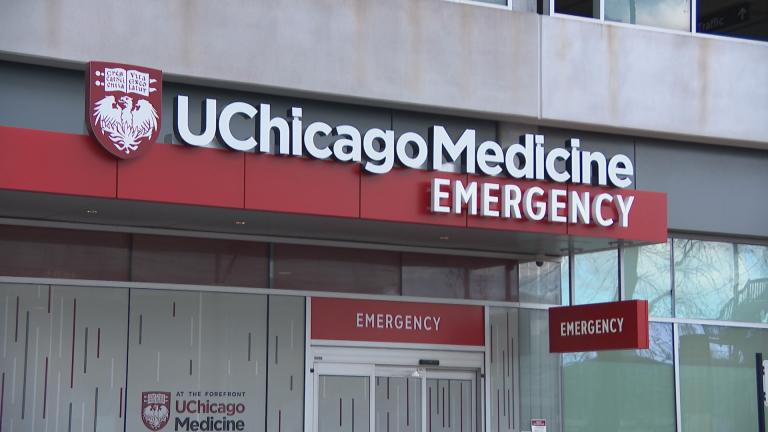
More than 38,000 patients. That’s how many people the University of Chicago Level 1 Trauma Center has served since it opened in 2018 — filling a so-called “trauma desert” on the South Side that had existed since the 1991 closure of Michael Reese Hospital’s trauma center in Bronzeville.
Nearly eight years after UChicago’s trauma center opened, numbers show it is delivering on many of its promises.
A new study published in the journal JAMA Surgery analyzed data on shootings between 2010 and 2024. This spans the time before and after the opening of the trauma center.
After the center’s opening, transportation time following firearm injuries dropped by nearly 10 minutes. Importantly, this translated to an estimated 79 lives saved for every 2,000 firearm injuries, according to the study.
More context:
It might not be surprising that speed can save lives in emergencies. But for Dr. Selwyn Rogers, the founding director of UChicago’s trauma center, having the numbers to back that up is an important part of the center’s past, present and future.
“There was significant community activism advocating for a trauma center on the South Side of Chicago,” Rogers said.
Protests sprung up after the death of Damien Turner in 2010, but it took five years for the University of Chicago and Sinai Health System to announce the creation of the trauma center. Now, being able to show that the center improves outcomes allows doctors, patients and advocates alike to focus on the center’s impact.
Beyond emergency medical care, the trauma center also provides physical and psychological care that might be needed for recovery. These services save lives, but Rogers said there are benefits that weren’t measured in the study.
“You also give (gun violence survivors) an opportunity for their families to see them again, to hold them again, to hug them again, and ultimately for them to have a full recovery,” Rogers said.
Shaving minutes off the transport time can also help save limbs and organs, and ultimately improve the quality of life for survivors.
|
|
|
|
|
|
|
|
|
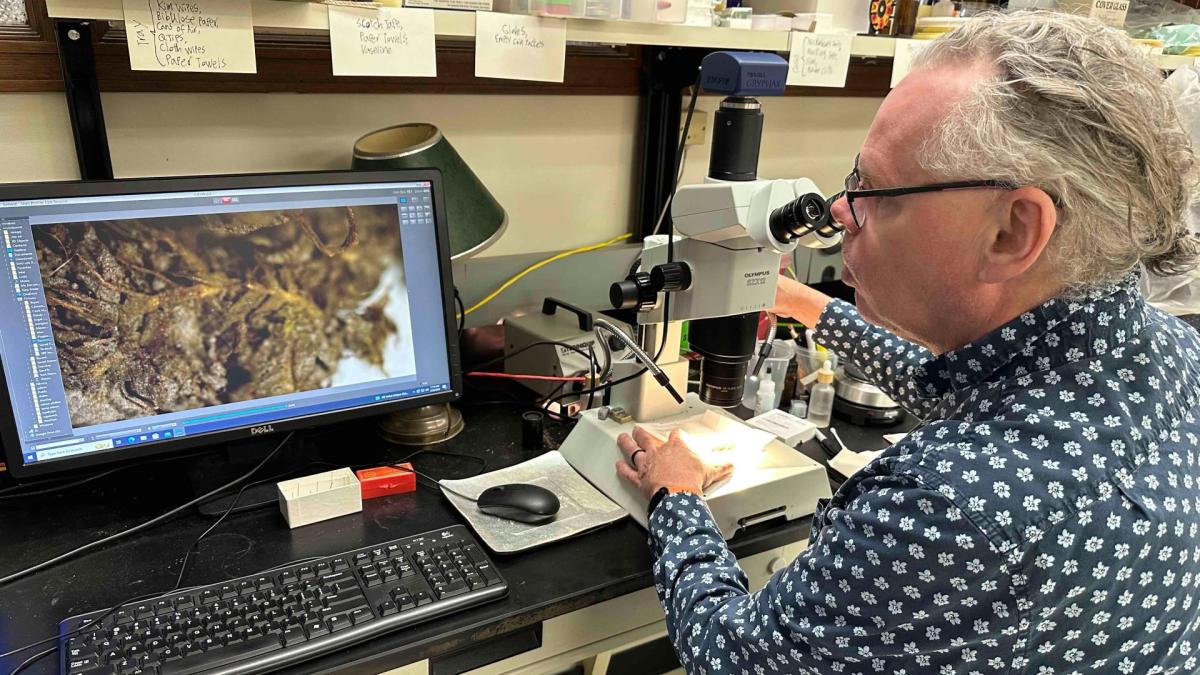
Matt von Konrat in his laboratory at the Field Museum on Feb. 26, 2026, examining the tiny bits of moss found with the re-buried bodies at Burr Oak Cemetery in 2009. The computer screen shows the view of the moss specimen under the microscope. (Courtesy of Field Museum)
|
It was a scandal that stunned the nation: a macabre story of modern-day grave robbing at a suburban Cook County cemetery, with human remains scooped from their burial sites, dumped elsewhere and the plots resold. The disturbing crimes at Burr Oak Cemetery, a historic graveyard in Alsip, came to light in 2009. Four employees were ultimately convicted of desecration, among other charges.
The full details surrounding a key piece of evidence against the defendants have now come to light. In a newly published research paper, Matt von Konrat, head of the botany collections at Chicago's Field Museum, recounts how a tiny clump of moss helped investigators reconstruct events and establish a timeline for the crimes.
“One day in 2009, I answered the phone, and it was the FBI, asking if I could help them identify some plants,” said von Konrat. “The investigators wanted to know what kind of moss it was, and how long it had been buried in the soil.”
To the untrained eye, moss is moss, but there are hundreds of different species in the Midwest alone. He compared the moss extracted from the cemetery with specimens in the Field's collection and, after consulting with several international experts, identified the species as Fissidens taxifolius, also known as common pocket moss.
A survey of the cemetery grounds showed a huge colony of common pocket moss growing in the area where graves had been disturbed, but none where remains had been deposited.
“So that gave us pretty strong evidence that the remains had come from this other section of the cemetery,” von Konrat said.
|
|
|
|
|
|
More From WTTW News:
|
|
|
 |
|
|
|
|
Back in the Day: March 9, 2011 - Gov. Pat Quinn Abolishes Death Penalty
|
On this day 15 years ago, then-Gov. Pat Quinn abolished the death penalty in Illinois. He called it the "most difficult decision" he made as governor, with the bill he signed coming more than a decade after the state imposed a moratorium on executions. All 15 inmates on Illinois' death row had their sentences commuted, forcing them to serve out a life sentence in prison instead. The initial pause of capital punishment in Illinois dated back to 2000, when then-Republican Gov. George Ryan made international headlines by suspending executions due to concerns that innocent people could be put to death following the revelation that 13 men were wrongfully condemned in the state between
1977 and 2000. "We all know that our state has had serious problems with respect to the system of the death penalty for many years," Quinn said.
|
|
|
|
|
This Week’s Civic Events & Meetings
|
Every Monday, WTTW News highlights the best ways to get involved with local government.
City Council's Committee on Workforce Development
On Tuesday at 12:30 p.m., the City Council's Committee on Workforce Development will hold a regular meeting. Among the orders of business on the agenda is a proposed amendment to the Municipal Code "prohibiting any City officer granted access to sensitive locations from participating in any extremist activity." For more details, click here.
Chicago Park District Board of Commissioners
On Wednesday at 9 a.m., the Chicago Park District Board of Commissioners will host its monthly meeting. With 10 action items on the agenda, peruse the specifics here and attend either remotely or in person at the Chicago Park District Administration Building (4830 S. Western Ave.).
City Council's Committee on Housing and Real Estate
On Thursday at 10 a.m., the Committee on Housing and Real Estate will hold a regular meeting. Among the items on the agenda are the establishment of the Proactive Rental Inspection Working Group and the acquisition of property at 1725 N. Harlem Ave. for use as a Chicago Public Library branch. For more details, click here.
|
|
|
|
|
|
|
What's your favorite local movie theater? Tell us why.
|
|
|
Email DailyChicagoan@wttw.com with your responses and your answers might be published.
|
|
|
|

|
|
5:30 PM | 10:00 PM
|
|
|
|
Want more WTTW News content? Follow WTTW on Instagram to check in with us daily, go behind-the-scenes, and more.
|
Newsletter Producer: Josh Terry
|
|
|
|
|